- Salt Lake City Mayor Mendenhall predicts 2026 will be a pivotal year for the city.
- She opposed an ICE facility, and emphasizes public safety and affordable housing, during her State of the City address.
- Other topics were addressed, including a warning that property tax increase is likely later this year.
SALT LAKE CITY — Last year was a year of decisiveness in Salt Lake City, but this year could be more important.
If anything, 2026 could be a "consequential" year for Utah's capital city, Salt Lake City Mayor Erin Mendenhall said as she delivered her annual State of the City address on Tuesday.
"History is something we are responsible for," she said, delivering her remarks from the top floor of the old Leonardo Museum, overlooking City Hall and downtown. "Today, that responsibility rests heavily on our city. At a time when divisive politics and dangerous rhetoric dominate headlines, the work of effective and representative local government matters more, not less."
The mayor outlined many challenges the city faces as it celebrates its 175th year, but she outlined ways the city is seeking to navigate those this year.
Here are five highlights from her message.
Salt Lake City does not want an ICE facility
Mendenhall opened and closed her speech by speaking about immigration, starting with a subject that's dominated headlines this month. She said she's thrilled that The Ritchie Group is not planning to sell or lease a warehouse to the federal government for an Immigration and Customs Enforcement facility, after penning a letter to the developer with her concerns earlier this month.
"Let me be clear: this isn't just about zoning restrictions. Such a facility has no place in our city, whether at that site or anywhere else," she said, later calling enforcement tactics in Maine, Minnesota and other parts of the country "utterly deplorable."
Residents have voiced their concerns about ICE in the past two Salt Lake City Council meetings, and there have been several protests in recent weeks in response to the rumored facility in the city and national events.
The city's police department doesn't collaborate with ICE on immigration-related operations, Mendenhall's office said earlier this month.
Instead, it's working to help immigrants become citizens through programs like the Future Citizens PATH Program, which helps green card holders navigate the citizenship process, she said. The city also plans to work with state and county officials to support immigrants living in the area by providing resources.
"This city is determined. Determined to support our residents, whether they've been here for decades or just days. Determined to govern with humanity and accountability," she said. "We will do the work. Otherwise, what have we fought and died for these last 250 years? How did America become great in the first place?"
Public safety
Salt Lake City is focused on "actual public safety needs," she added. It has made progress since implementing a new public safety plan, which was released just before her State of the City address last year. It's experienced positive signs from a program treating repeat offenders, and it's working to improve housing situations for people experiencing homelessness, she said.
It's also looking at ways to improve response times and lighting, including in public spaces, as it seeks to implement more of the plan.
"As Salt Lake City grows, so too does demand and our responsibility to ensure those shared spaces are safe, welcoming and that they're worthy of the people who use them," she said.
The progress has been enough that Utah House Speaker Mike Schultz, R-Hooper, praised the city for having "really stepped up" its efforts, after state leaders called on the city to produce a safety plan to address policing "inadequacies" in 2024.
Handling growth
Salt Lake City was the state's fastest-growing city in 2024 and has been among the state leaders in other years. The city has responded to demand by revising its zoning codes and taking other steps to accelerate housing development, which may keep prices attainable, Mendenhall said.
Rents dropped by an average of 8.25% amid an uptick in new apartments, per the Rental Housing Association of Utah. The city has also set aside $135 million for affordable housing construction since 2020, resulting in more than 7,500 affordable housing units.
That's not the only response the city is taking to growth, she added. The city remains committed to building more trails in the foothills, and it plans to make safer road crossings and improve transit service to accommodate a larger city.
"When our families grow, we don't just keep squeezing in the same seats around the dining room table. We make room. ... We adapt the space so everyone can gather with dignity," she said. "Growth creates opportunity, but only if everyone has a seat."
The Green Loop is almost here — sort of
After years of touting her vision for a "Green Loop" circling downtown via 200 East, 900 South, 500 West and South Temple, the project is close to fruition. The project, Mendenhall said, will add more green space for the growing city while also linking to other drastic downtown plans as part of Smith Entertainment Group's revitalization.
It won't come all at once; rather, it will be "block by block," with each segment built to reflect the neighborhood it's in.
The mayor unveiled new renderings for the "civic center" between the Salt Lake City-County Building and Library Square, converting the concrete plaza outside of the library into more green space. The design would be similar to the Washington Square Park across the street from the library.
She plans to ask the City Council to approve $2.2 million in capital improvement funds to produce documents to prepare it for construction, which will ultimately be one of the pieces along the eastern section of the project.
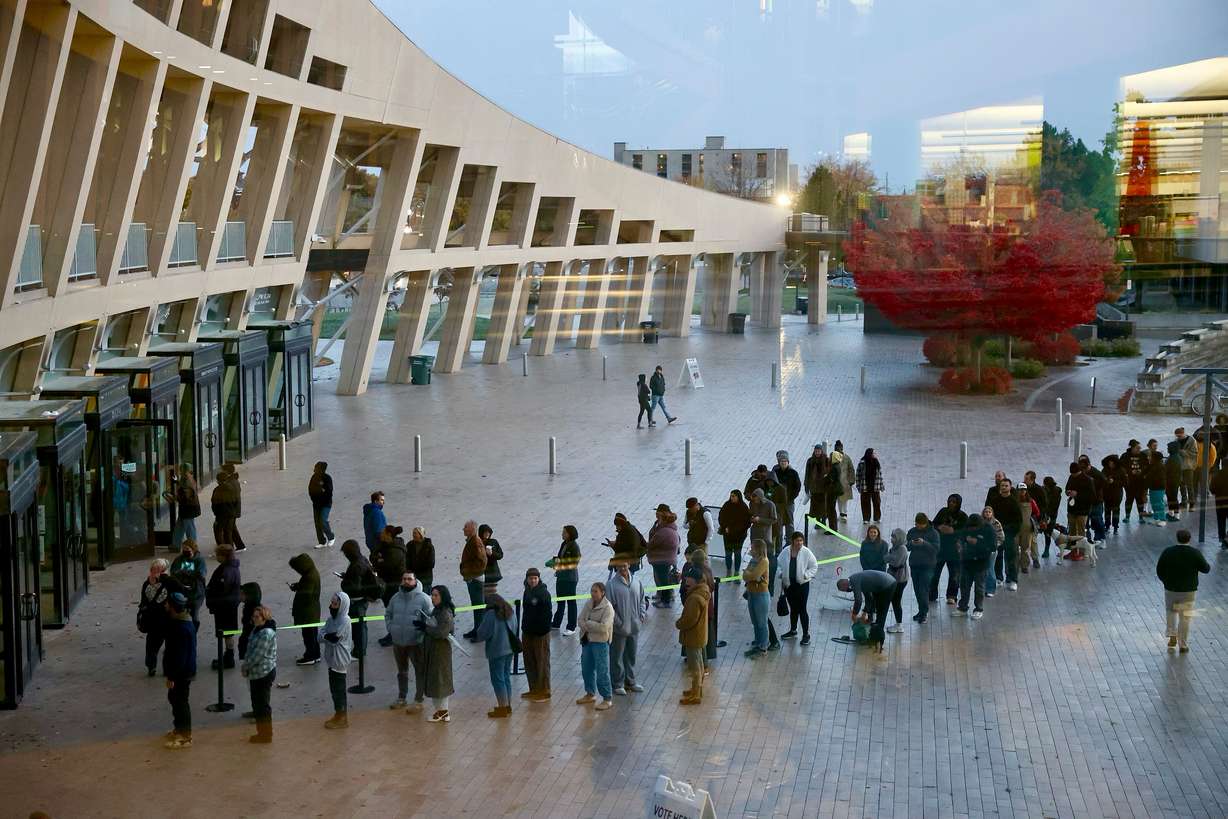
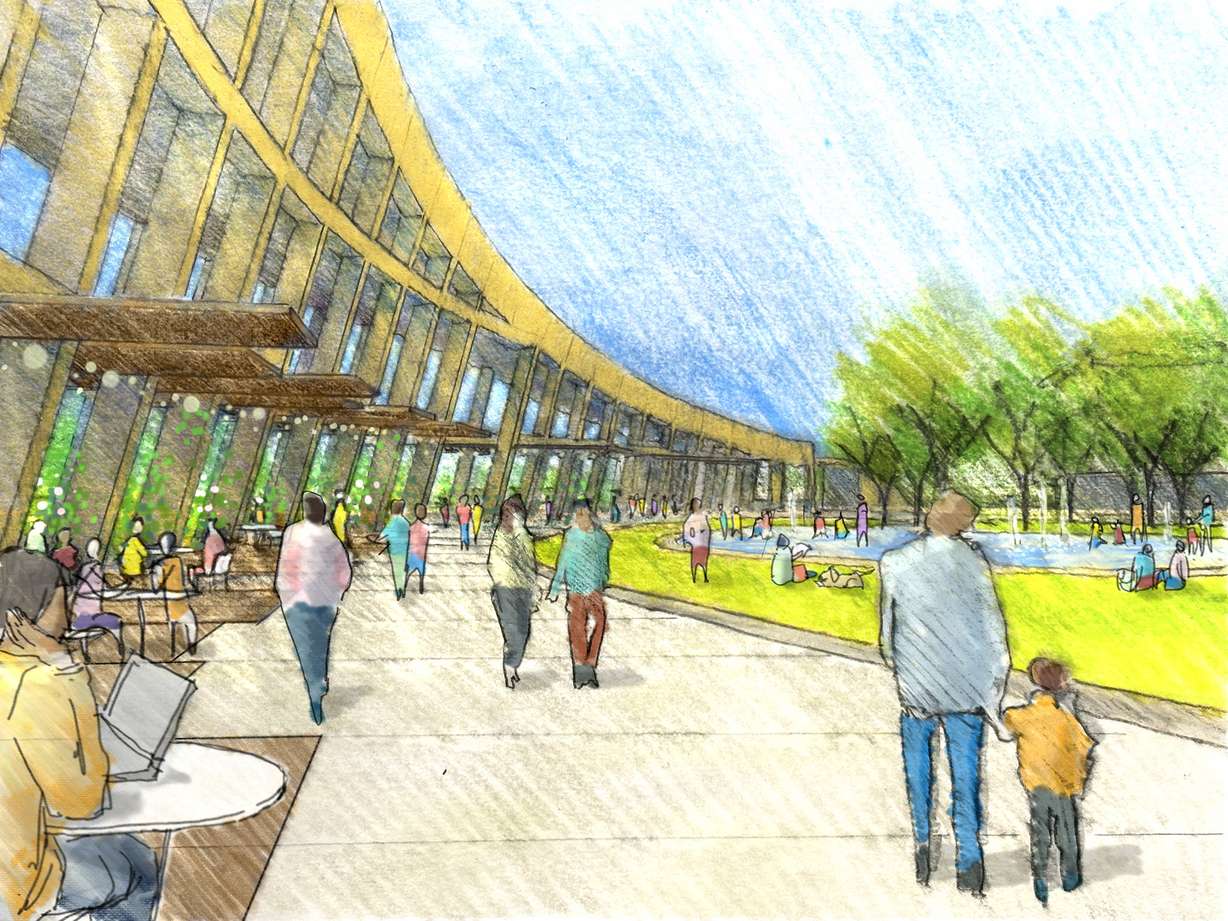
Construction could begin as early as 2027, said Blake Thomas, senior adviser on real estate and capital projects for the Salt Lake City Mayor's Office.
Design work will also begin soon for more of the 500 West sections of the loop, while the city and The Church of Jesus Christ of Latter-day Saints plan to begin discussions on how to transform the northern section of the loop after next year's Salt Lake Temple open house, Mendenhall said. The two entities will partner on a design for the loop along South Temple.
The city's 9-Line Trail is scheduled for improvement at the southern end of the loop.
Mendenhall's goal is to complete all of the small projects in time for the 2034 Winter Olympic and Paralympic Games.
Tax increases coming?
It isn't quite time for Salt Lake City to begin working on its next budget, but the mayor warned that the city "most likely cannot avoid" a city property tax increase when that process begins later this year.
Cuts in county, state and federal budgets were mentioned as city leaders finalized the current Salt Lake City budget last year. It's unclear yet what this year's increase will look like, especially since new legislation could affect how much the city is able to request.
However, that also remains to be seen. The City Council, which has final say on the budget, doesn't see a need for an increase right now, but it will listen to the mayor's formal proposal this spring to see if it makes sense, Salt Lake City Council Chairman Alejandro Puy told KSL after the speech.
Finding ways to reuse The Leonardo space is helping ease the blow since the museum closed for good last year, Mendenhall noted.
"We will not raise (taxes) to build a new administrative building," she said. "We will use what we already have, keeping it activated and functional on all three floors."
It's already home for the Salt Lake City Downtown Farmers Market this winter. It will allow Ken Sanders Rare Books to continue operating in the building while converting the building's first-floor space for after-school programming led by the city's Youth and Family division.
Its second floor will be used to display visual and folk art from local artists, along with space for lectures and classes, through a partnership between the Salt Lake City Arts Council and the Utah Division of Arts & Museums, she added.
The building's top floor will serve as additional city office space for approximately 70 employees, effectively creating an unofficial "City Hall East."