Estimated read time: 4-5 minutes
- Salt Lake City commuters face regular delays due to east-west travel challenges.
- Early solutions include pedestrian bridges and delay warning systems, but more solutions are desired.
- A recommended action plan is expected by 2027, but funding questions are ahead.
SALT LAKE CITY — Between roads blocked by trains and congestion from freeway traffic, nearly three out of four Salt Lake City commuters who responded to a survey as part of the city's east-west study said they deal with travel delays multiple times a day, usually daily.
That underscores the challenges that exist in Utah's capital city.
"It's real clear that there's a really robust mobility challenge in the city," said Joe Taylor, a transportation planner for Salt Lake City. "You try to get from one half of the city to the other, and you are often met with an unpredictable challenge. ... It's not that you can't do it, it's that you can't predict how it's going to go."
Salt Lake's divide
Salt Lake City transportation planners provided city leaders with an update about the study on Tuesday, as they near the end of the first phase of it. Over 1,000 people have responded to the "WE Connect" study since Salt Lake City launched it earlier this year, many of whom live in Glendale, Poplar Grove and Rose Park, as the city collected stories and feedback about the challenges created by I-15 and the railroad corridor that splits the city in half.
On top of regular delays, respondents expressed concerns with transportation safety, air quality and accessibility to health care and education, as none of the city's high schools or major hospitals are on the west side. There are several west-side jobs, but only 6% of west-side jobs are held by people living in the area, which adds to the pool of people who experience the divide.
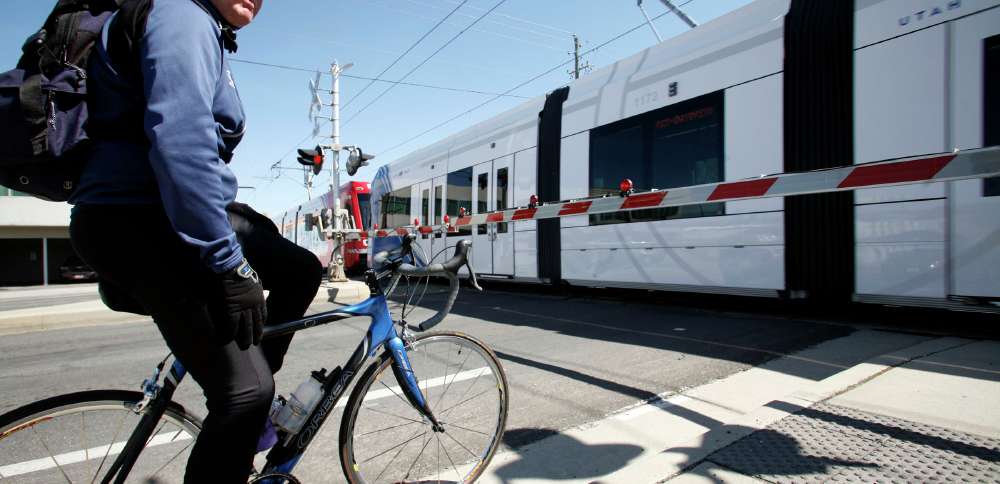
Meanwhile, planners also studied traffic impacts in the area. Although commuter train-related gate closures average less than 60 seconds, planners found that the worst blockages ranged from 23 minutes to 14 hours for freight trains.
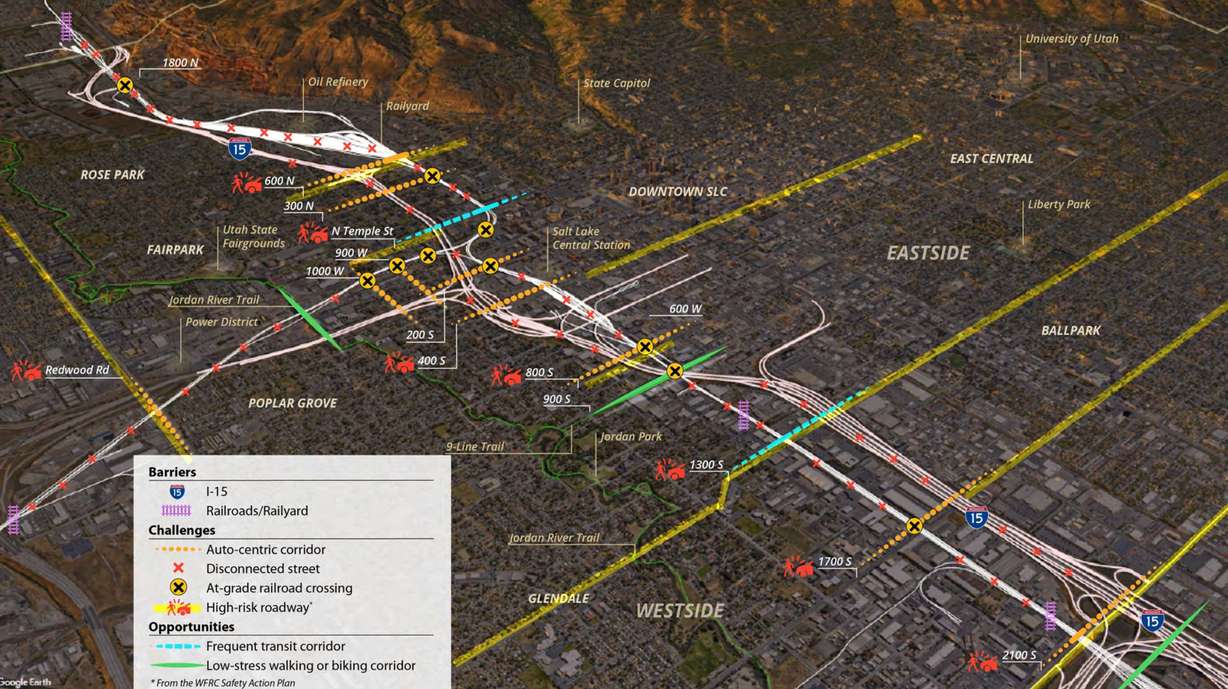
The findings weren't too shocking, as they reinforced experiences that people have had for over a century. The city's divide dates back to the railroad corridor's creation in the 1870s.
The situation is the worst for people biking, walking or riding a bus, and the city has heard from west side businesses that they've adjusted work schedules to account for workers being delayed on their commutes, said Salt Lake City Council Vice Chairman Alejandro Puy, whose district covers the city's southwest corner.
"The impact is not new, it's enhanced," he told KSL.com after the presentation. "I'm excited to have something on paper that says this is a big problem, even though the community knew that ... so we're moving the needle into putting something that hopefully triggers the request for improvement."
Planners found many residents who preferred traveling south into West Valley City or north into Bountiful rather than attempting to cross the divide.
The situation may only get worse, too. Utah Transit Authority wants to increase FrontRunner frequency, while more freight trains are likely with the growth of the state's inland port. Growth along the North Temple corridor and planned redevelopment near the Utah State Fairpark, including a potential baseball stadium, could add additional traffic issues, City Councilman Dan Dugan said.
Finding new solutions
Some solutions have been implemented already, such as a pedestrian bridge over the rails at 300 North and the city's investment in a system that warns commuters about expected delay times at blocked crossings. The latter doesn't help as much if the required destination can't be reached outside of crossing the tracks, which is common in many cases, Puy said.
City transportation planners will seek the public's help in brainstorming more solutions as part of the study's next step.
This would be game-changing for tens of thousands of neighbors on the west side.
–Salt Lake City Council Vice Chairman Alejandro Puy
Solutions could range from tunnels, bridges, and "mega projects" down to community centers or community needs, Taylor explained. Large-scale transportation projects could include something like burying the train lines or adjustments to overpasses or the routes that send trains through downtown.
A team of engineers, economists and urban planners will analyze solutions and come up with an action plan based on what options could be the most helpful. A recommended action plan is scheduled to be compiled in 2027 as the study continues.
"We're going to attempt to prioritize what we think has the best chance of working and best solves the problem," Taylor said.
Ways to potentially fund those projects would also be considered toward the end.
It will likely require outside funding, which could be tricky. Changes at the federal level could make it difficult to receive federal funding, Puy said, which is why he hopes the city can receive "legacy funding" as a host of the 2034 Winter Olympics and Paralympics.
"This would be game-changing for tens of thousands of neighbors on the west side," he said. "This is one of the most impactful legacies that we could leave in our city, long-term, so it would be amazing to do something like this."