- David Stephensen, 74, has been a Latter-day Saint ward organist for 55 years.
- Despite not reading music well, he plays by ear and has a rich history of enjoying music.
- Stephensen hopes to inspire younger generations to learn to play the organ.
MESA, Arizona — When David Stephensen steps into his Latter-day Saint chapel, he knows exactly where he's going to sit because it's the same place he's sat for the past 55 years: at the organ.
And he wouldn't have it any other way.
Stephensen, 74, who was first seen on KSL.com playing alongside his daughter, was called to be the ward organist when he was just 19 years old. "Callings," as they're referred to, are special assignments given to members of The Church of Jesus Christ of Latter-day Saints and are done on a volunteer basis.
Stephensen said that when he was first called, he was so excited because his church had a real pipe organ with a sound that "got into his soul." He also said that he has the "easiest calling in the ward," despite not being able to read music very well.
"I was always fascinated by the piano," Stephensen said. "We had an old piano in the back room that had a broken soundboard, but it was all I knew, so to me it sounded great. My mother put me in organ lessons for a little bit, but the teacher said, 'You know, David is not learning to read. I will play the song for him, and he will play it by ear back to me. I can't teach him how to play music, so that's something he'll have to do on his own.'"
Stephensen did eventually learn on his own how to read some music, but only that found in the hymn books. The rest, he played by ear.
"Over time, I learned how to read many of the hymns because the hymns are just 34 notes — soprano, alto, tenor, bass," he said. "After a while of playing the hymns and looking at the music, I realized the notes were matching up to what my fingers were doing. I can read most of the hymns, but I'm not a trained musician in that you could put music in front of me and expect me to play it on the spot because I don't read that well."
When I first started, I just enjoyed playing the organ. And now, as I'm older, I feel more like I'm bearing testimony through song.
–David Stephensen
Stephensen told KSL.com about a memorable experience during his early days playing for his church congregation.
"One of my favorite stories was in the early years when I was playing prelude music," he said. "Because I couldn't read the music, I just sort of played off the top of my head what I felt sounded good. Out of the blue, I found myself playing the song 'Whiter Shade of Pale' (by the 1960s British rock band Procol Harum). It's really a pretty song; sort of a slow love ballad.
"I started playing this 'hippie' song in the church meeting just because it came to my mind. I looked around at the audience to see if anybody picked up on it, and there was only one person out of the audience who caught my eye. She nodded her head and winked at me. She kind of raised her finger to me and sort of scolded me. That was the moment I thought, 'I want to be famous and do this full-time.'"
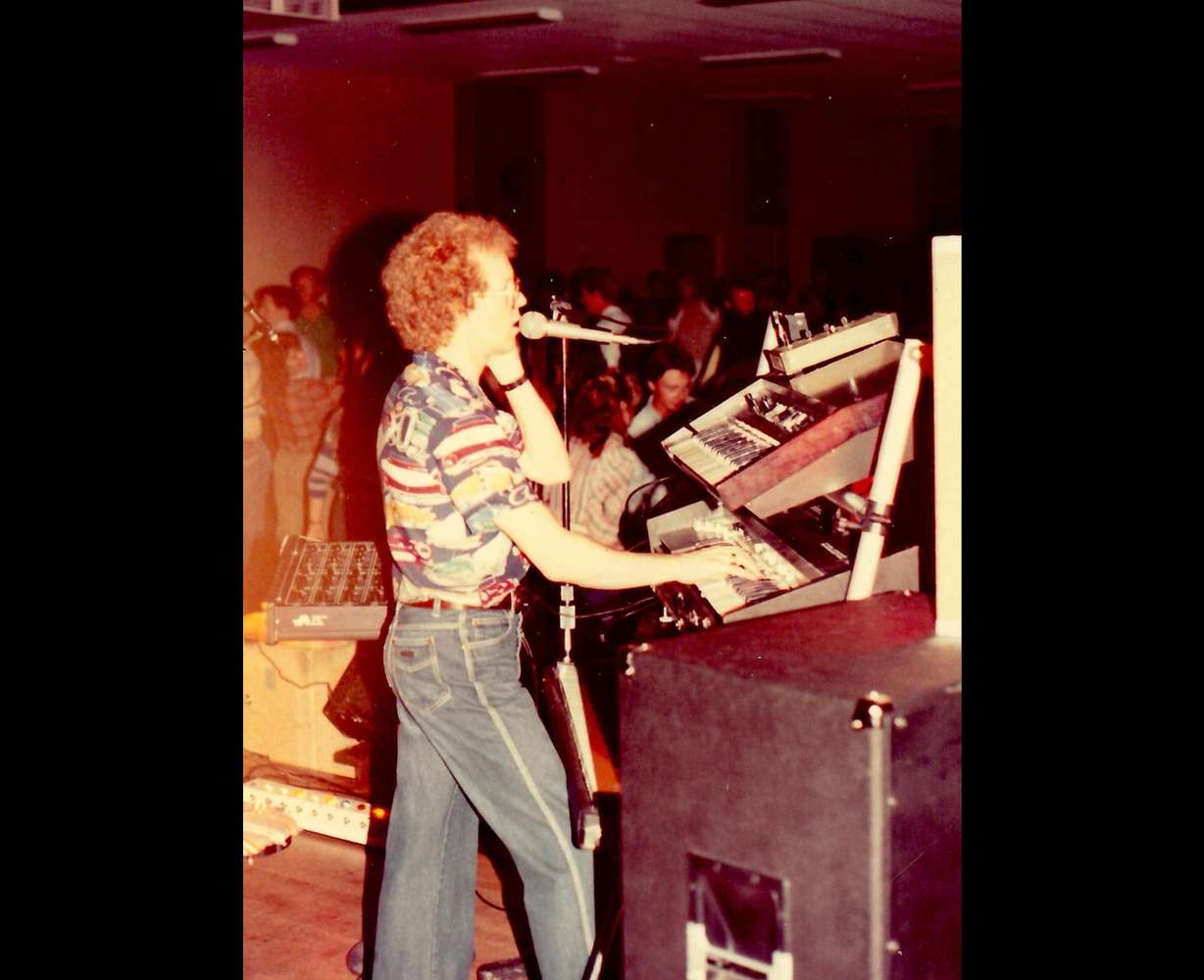
And he had a good run there for a while. Despite his inability to read music, Stephensen managed to have quite a musical repertoire outside of and prior to his church calling. He played in several bands and even traveled with Bob Hope's USO Tour, playing for U.S. troops. He performed in venues with Huey Lewis (and the then American Express). He was also in the BYU Jazz Ensemble with well-known Utah musicians Sam Cardon and Kurt Bestor.
His music "career" was cut short, however, when he was drafted to serve in the Vietnam War.
"The band I was in with my brother had a performance contract for six months, and then the long arm of Uncle Sam reached out during the time that the draft was still on, so that ended our career in music," Stephensen said. "We became Air Force enlistees."
And while he may not have pursued a profession in music, Stephensen works as a mental health counselor for veterans, often using music as a therapeutic tool.
Stephensen said that playing the organ at church every Sunday has kept his love for music alive and strengthened his faith in God. He said that despite a few moves across state lines, his ability to play the organ has kept him in a place where he feels the most comfortable and able to share his testimony.
"It's just really an enjoyable thing," he said. "When I first started, I just enjoyed playing the organ. And now, as I'm older, I feel more like I'm bearing testimony through song."
As time will inevitably go on, Stephensen acknowledged that he may not be able to serve in his calling as ward organist for much longer. He said that he is well aware of technology that, with a push of a button, accompaniment can be delivered to congregations eager to sing hymns. He said, however, that he hopes that a new generation will want to learn to play the organ, adding that he has offered lessons to anyone who wants to learn.
"One of these days, I'm going to be feeling too old and tired to play the organ, and there aren't that many people who have this great ambition to be an organist," he said. A lot of the new buildings now have buttons that just preplay hymns, and I think it's really important that we get younger people interested in it again."
Until then, Stephensen said his calling is one of many reasons he gets up and goes to church on Sunday.
"Some church days, you don't feel like even going to church. But once I start playing, I start feeling the spirit and feeling good about being there. This calling has really been a blessing," he said.
Have You Seen This?

Daddy-daughter duo plays jazzy rendition of 'Daddy's Homecoming'
In today's special Father's Day HYST pianist and jazz singer, Emily Susan Pack sat next to her dad as the two played a jazzy rendition of the primary song that says, "I'm so glad when daddy comes home."