'%3e%3cpath%20d='M34.1406%205.85938C30.3906%202.10547%2025.3047%200%2020%200C14.6953%200%209.60938%202.10547%205.85938%205.85938C2.10938%209.61328%200%2014.6953%200%2020C0%2025.3047%202.10547%2030.3906%205.85938%2034.1406C9.61328%2037.8906%2014.6953%2040%2020%2040C25.3047%2040%2030.3906%2037.8945%2034.1406%2034.1406C37.8906%2030.3906%2040%2025.3047%2040%2020C40%2014.6953%2037.8945%209.60938%2034.1406%205.85938ZM37.0117%2023.543H31.1602V13.5391H27.6328V19.9414C28.1211%2020.6914%2028.3711%2021.582%2028.3711%2022.5625V22.625C28.3711%2023.668%2028.1172%2024.6055%2027.6328%2025.4297V26.6094H36.082C33.4883%2032.9375%2027.2891%2037.3789%2020.0039%2037.3789C10.3711%2037.3789%202.62109%2029.6289%202.62109%2020C2.62109%2010.3711%2010.3711%202.62109%2020%202.62109C29.6289%202.62109%2037.3789%2010.3711%2037.3789%2020C37.3789%2021.1484%2037.2617%2022.2656%2037.0508%2023.3477C37.0391%2023.4141%2037.0234%2023.4766%2037.0117%2023.543Z'%20fill='white'/%3e%3cpath%20d='M22.3086%2018.5352C20.4336%2018.125%2019.9531%2017.8398%2019.9766%2017.1836V17.1406C19.9766%2016.6992%2020.3477%2016.2148%2021.4023%2016.2148C22.582%2016.2148%2023.8867%2016.6797%2025.0781%2017.4766L26.8516%2015.0195C25.4453%2013.8906%2023.707%2013.3398%2021.5547%2013.3398C18.5195%2013.3398%2016.4375%2015%2016.4063%2017.4766V17.5352C16.3633%2020.2617%2018.5859%2020.9805%2021.293%2021.6016C23.0391%2021.9766%2023.5703%2022.3164%2023.5703%2022.9609L23.5469%2022.9766C23.5469%2023.3906%2023.2578%2023.7031%2022.7852%2023.8359C22.5742%2023.9062%2022.1289%2023.9727%2021.5156%2023.9727C20.7617%2023.9727%2019.7539%2023.8633%2018.6328%2023.4844C18.0898%2023.2891%2017.4727%2023.0039%2016.8047%2022.6133L20.1406%2026.625C20.2813%2026.6602%2021.0977%2026.8516%2021.7734%2026.8516C25.0039%2026.8516%2027.0859%2025.2461%2027.1094%2022.6328V22.5703C27.1602%2020.1133%2025.2148%2019.1719%2022.3086%2018.5352Z'%20fill='white'/%3e%3cpath%20d='M5.24219%2013.5664V26.6133H8.75391V23.7578L10.2969%2021.9531L14.2031%2026.6133H18.3867L12.3555%2019.5195L17.4023%2013.5664H13.4531L8.75391%2019.0586V13.5664H5.24219Z'%20fill='white'/%3e%3c/g%3e%3cdefs%3e%3cclipPath%20id='clip0_97_2430'%3e%3crect%20width='40'%20height='40'%20fill='white'/%3e%3c/clipPath%3e%3c/defs%3e%3c/svg%3e)


This archived news story is available only for your personal, non-commercial use. Information in the story may be outdated or superseded by additional information. Reading or replaying the story in its archived form does not constitute a republication of the story.
- Gracie's Farm in Wanship, Summit County, hosts farm-to-table dinners featuring seasonal produce.
- The dinner series, organized by The Lodge at Blue Sky, highlights local ingredients.
- Lynsey Gammon emphasizes the benefits of seasonal eating and community engagement in agriculture.
WANSHIP, Summit County — When Lynsey Gammon first started Gracie's Farm, the soil was dry and barren. Seven years later, her team is hosting dinners among the rows of crops, and their abundant seasonal produce is the star of the show.
Gracie's Farm Dinner Series, hosted by the Lodge at Blue Sky, celebrates local and seasonal ingredients by spotlighting specific crops in a fine dining experience. The first dinner in the series, held on June 19, highlighted baby spring vegetables like radishes, peas and early spring greens. The following three dinners will feature garlic, tomatoes and the final harvest.
It's taken a lot of work for Gammon and her team to get to this point, but she says their efforts pay off when members of the community become more engaged with local growers and enjoy eating produce in their seasons.
"It's a really good way to highlight everybody and get people together to enjoy what farmers do and how chefs can actually make a kind of magic with those ingredients," Gammon said. "We wanted to really focus on seasonal eating and allow people to become aware of what it means to eat seasonally."
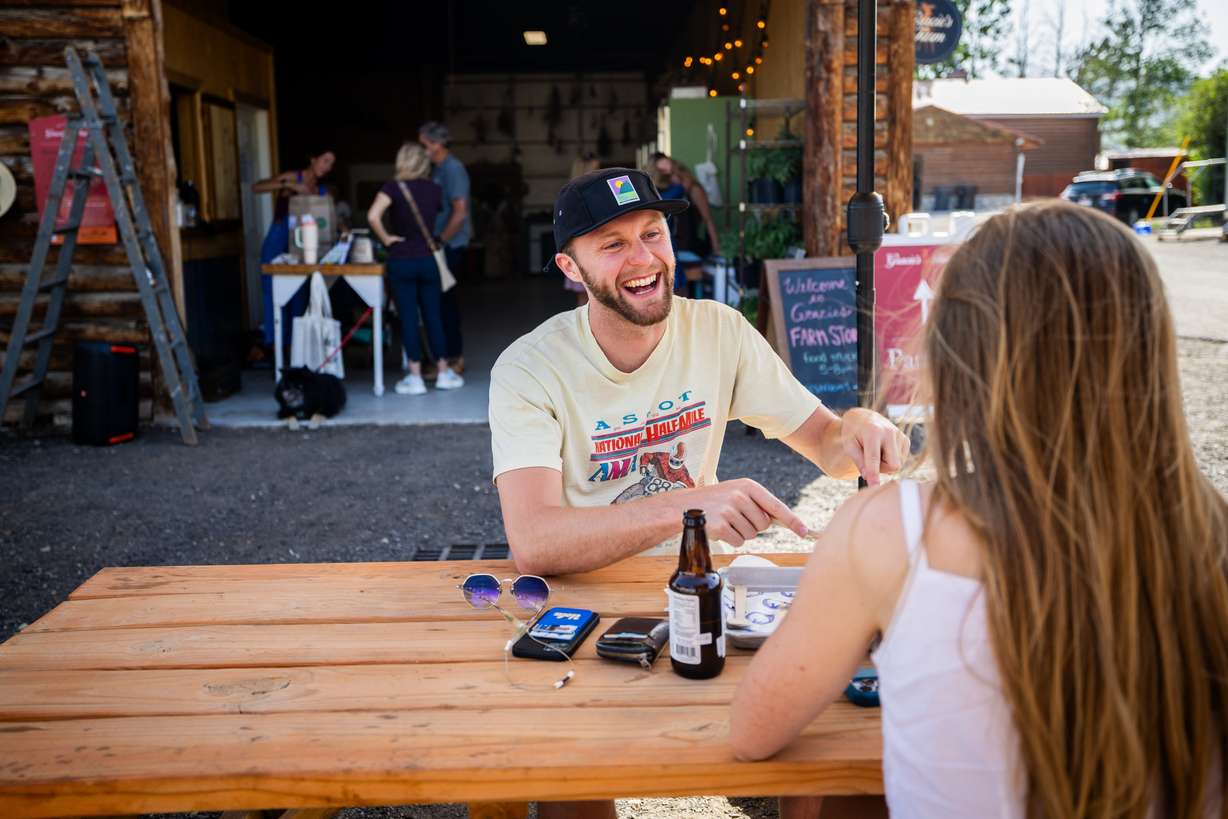
The dinners are held at the farm itself, with one long table set up between the rows of the garden. It's a whole new take on farm-to-table eating — rather than bringing fresh produce to a local eatery; guests come to the farm itself to get as close as possible to the source of their food. The courses are even prepared in an outdoor kitchen set up specifically for the occasion.
This table-to-farm setup presents some challenges — Zoltan Lucskai, the banquet captain at Blue Sky, says it takes several hours to prepare and requires a lot of organization and walking back and forth. However, he says it's worth the effort.
"It's just beautiful. The outdoor event is more challenging, but it's much more heartfelt and just gives you more value in the end, I think," he said.
Making the garden grow
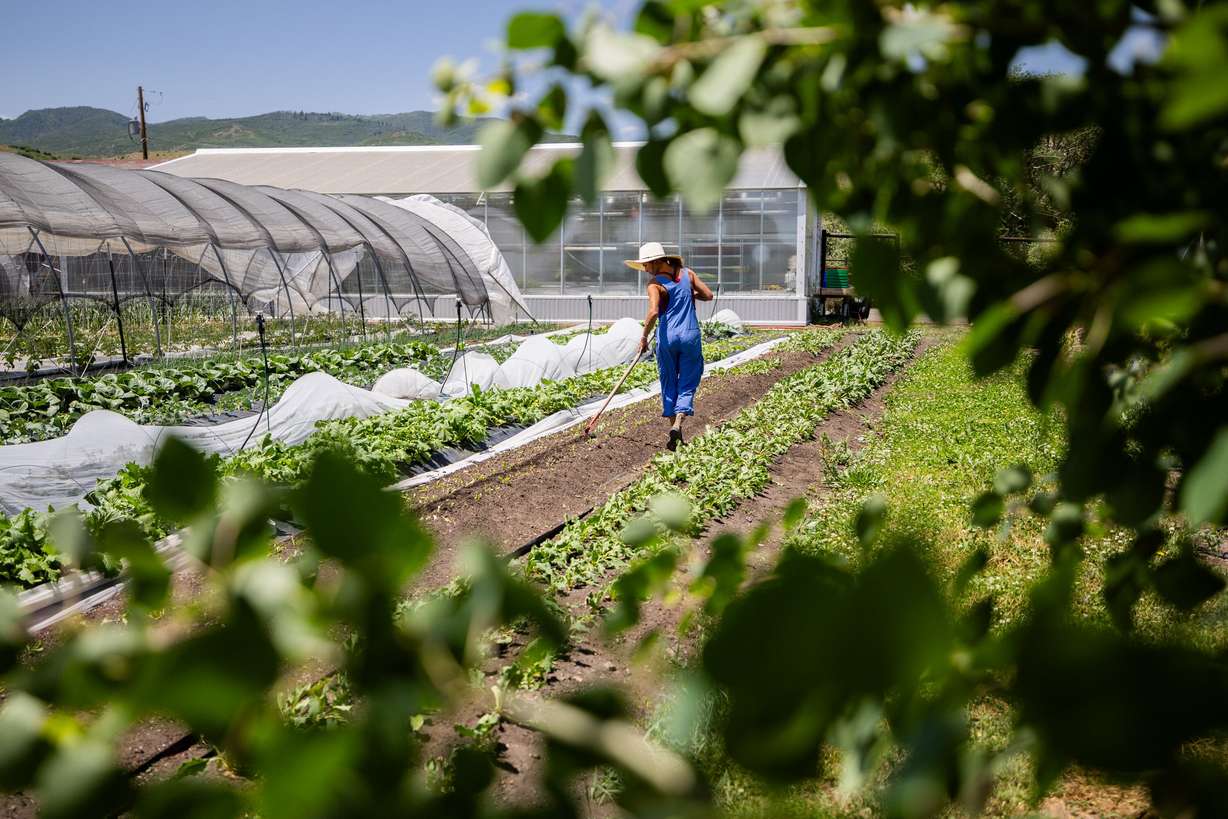
It's hard to imagine, standing among the rows of abundant crops, but the land that is now Gracie's Farm was once a dry pasture that had been overgrazed by horses and cattle.
Gammon, who actually has a background in public health, got into agriculture after starting a small garden in Salt Lake City and selling produce to a local market. She said Mike and Barb Phillips, the owners of Blue Sky, always envisioned a broader connection to the land for their resort. When they hired Gammon to start a farm from scratch, they didn't just want to grow crops to supply the lodge's restaurants; their goal was to foster a unique, local, farm-to-table experience for their guests.
Farming in Utah presents some unique challenges. To begin with, the soil is dry and can lack essential nutrients, which means it needs a lot of water and organic matter before anything can grow. Once Utah farmers have adequately prepared their soil, they only have a short time to plant, grow and harvest food — the growing season in the Park City area only lasts around 65 days, from Father's Day to Labor Day.
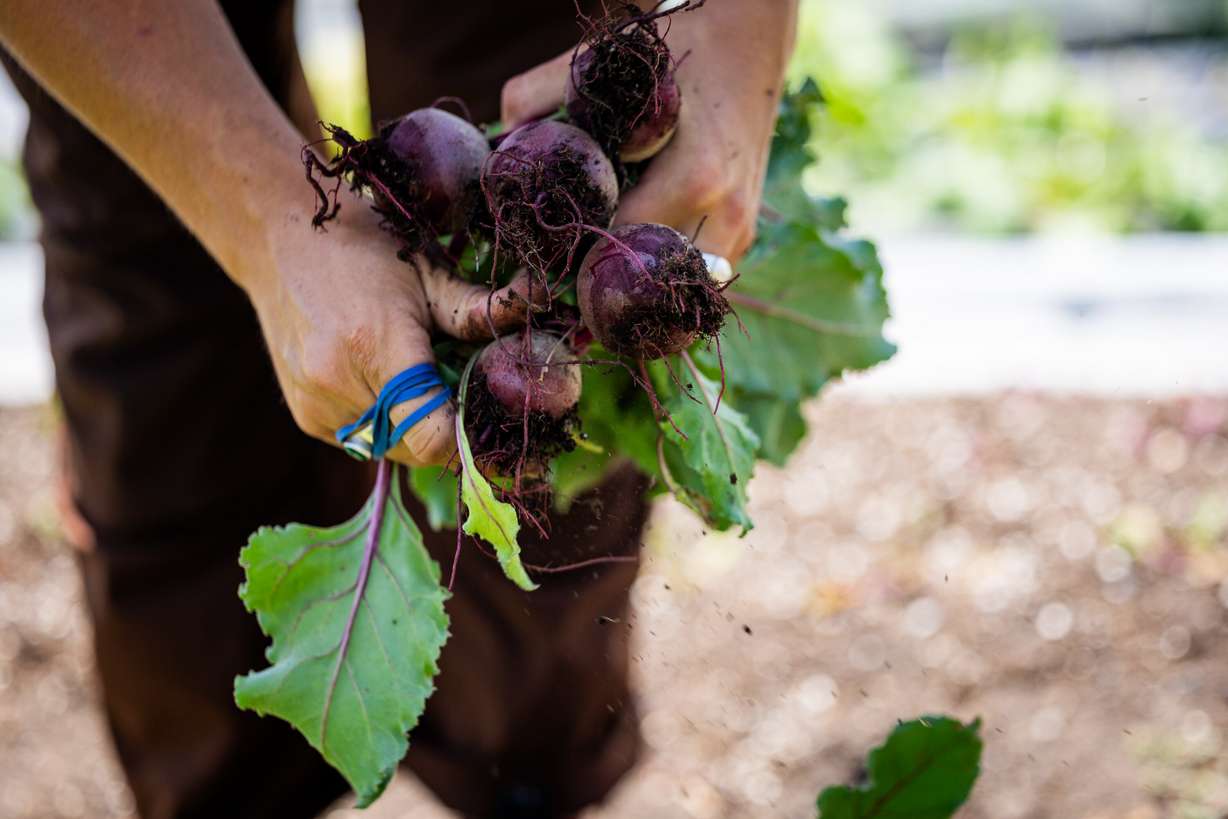
Focusing on growing crops that work with Utah's climate and environment has helped Gracie's Farm address both of those issues.
"We've created a very prolific farm over the past several years, doing it all regeneratively and organically, mostly by hand, with a team of all women farmers," Gammon said. "We've prepped the land, enriched the soil and planted climate-appropriate crops so that we can maximize our production but also have respect for the earth."
Before they began planting, Gammon and her team added "tons of organic matter to the soil," which gave it the nutrients it desperately needed. Improving the soil's health also helps with moisture retention, which means the farmers don't waste water — a necessity in Utah's dry climate.
As for the short growing season, Gracie's Farm is able to extend that time a bit with tunnels and greenhouses, but Gammon says the best thing they can do is focus on climate-appropriate crops. Growing produce suited to Utah's climate means they don't need to use excess water, and the farmers are able to focus their energy on select crops.
The benefits of seasonal eating
The short growing season is actually part of the inspiration for the farm dinner series. Because the farm's produce is grown in its prime season and picked at the peak of freshness, the flavors are stronger than what you can expect from mass-produced produce that is picked early and forced to ripen off the vine.
"The season on our farm, because it's so short, we really have these highlighted times of ingredients," Gammon said.
Gammon earned a master's degree in public health before she started working in agriculture, and she said she's seen some overlap in her two fields as she focuses on nutrient density in food.
"When we're selling our food, it's the best food that you can eat. We're providing people with a quality diet, and that's the key to so many other health factors," she said. "The accessibility to healthy food is always on my mind. We try to involve the community as much as possible, and so the broader the reach, the better."
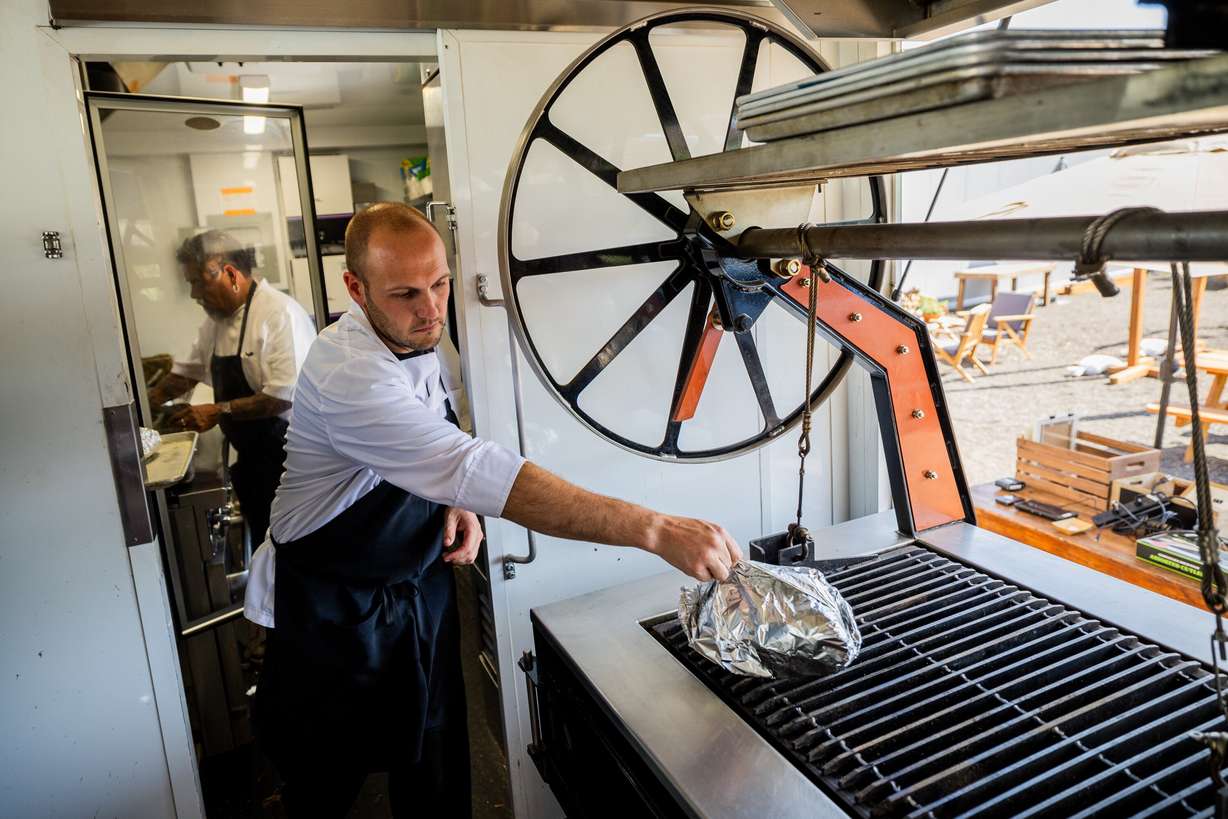
Seasonal eating can introduce people to produce they might not normally try. For the first course of the "baby spring veggies" dinner, head chef Guillermo Tellez served a chilled corn and sweet kale soup garnished with macha sauce and corn shoots. While the guests enjoyed the soup, the corn shoots were the star of the show — surprisingly sweet and tender, and an ingredient few had tried before.
Focusing on seasonal ingredients also means you might use those ingredients in unorthodox ways. Tellez said one of the best dishes he's crafted for the dinner series was a candied tomato with vanilla ice cream. And the upcoming garlic dinner on July 10 will include the farm's garlic in every course — yes, including dessert.
"Why change and mask flavors when the vegetables can speak for themselves?" Tellez said. "You manipulate it the least amount, and you end up with great products."