
Estimated read time: 5-6 minutes
- Sen. John Curtis introduced the "Locality Pay Fairness and Improvement Act" to address wage disparities.
- The bill aims to modernize federal pay calculations, considering local costs and labor conditions.
- Curtis' proposal includes a pilot program in Utah, seeking bipartisan support and union cooperation.
WASHINGTON — Ask Utah Sen. John Curtis about the Beehive State's defense industry, and he'll likely answer with equal parts enthusiasm and alarm.
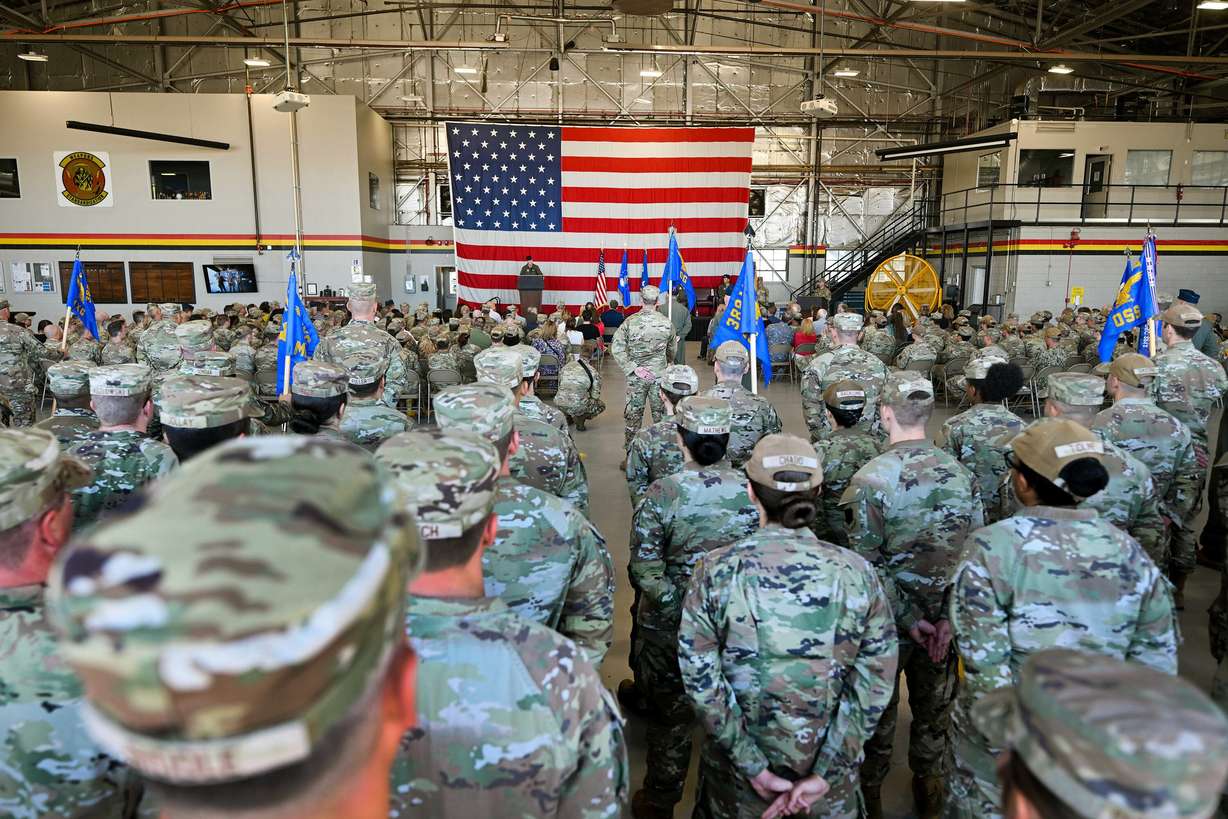
He's quick to give a shout-out to Utah's vast defense ecosystem across active-duty military, civilian federal workers and those connected to the industry in the private sector.
"The innovative spirit in Utah, the hardworking spirit in Utah (and) the creativity in Utah all come together in a fabulous way to make us a leader in the country — and therefore a leader in the world in these areas," Curtis told the Deseret News.
Now the alarm.
The senator worries Utah's federal workers are not being paid a competitive wage for their respective jobs. It's essential, he added, "to make sure we're not disadvantaging them with a compensation program that puts them behind the ball."
Responding to concerns he's heard from federal employees working at Utah-based operations such as Hill Air Force Base, Curtis introduced Thursday the "Locality Pay Fairness and Improvement Act" to tackle what he calls systemwide flaws in how the federal government calculates "locality pay."
The proposed legislation aims to find solutions to fortify both recruitment and retention across Utah's defense industry by modernizing how federal pay is calculated — allowing agencies to consider factors such as local housing costs, blue-collar wages and labor market conditions, according to Curtis' office.
The federal government's locality pay is calculated by comparing federal and private-sector wages across various occupations. But the current system leaves many Utahns on the short end of what they deserve, argues Curtis.
And at a time when the cost of living in housing and other expenses is rising across the Wasatch Front, most federal employees in Utah are still receiving the same locality pay adjustment as federal workers in less expensive labor markets in the country.
That compensation disparity, Curtis warned, triggers "devastating" consequences.
"Utah has some huge advantages, and you can sell those to some degree. But at the end of the day, if (federal workers) can't afford that house payment, we can't keep them."
And it's a problem stretching beyond the local defense industry, he added. "All federal workers are victims of this formula that is not appropriately picking up the costs that we've seen increase in Utah."
Curtis' bill is designed to be a long-term, deliberate response to the locality pay issue.
It calls for an initial independent study of the labor landscape and impacted occupations followed by a multi-year research program. Also included is a pilot program prioritizing areas where federal pay gaps are being widened by private-sector pay, and in defense and technical positions where federal agencies are struggling to recruit and retain workers.
Utah, no surprise, is a likely candidate to be a "pilot state."
"We've got stakeholder support here in Utah, and they're anxious to be part of that pilot program," said Curtis. "We feel like Utah would be a great place to do it."
Curtis' federal compensation bill: A second shot
Capitol Hill watchers likely recognize much of what's in Thursday's "Locality Pay Fairness and Improvement Act."
Last year, Curtis proposed a similar federal compensation bill that was toppled after the largest federal employee union came out in opposition.
The Utah senator had hoped to attach an amendment to the National Defense Authorization Act to create a pilot program in the Beehive State contemporizing locality pay for federal employees.
Curtis believed the amendment enjoyed the bipartisan support needed to pass, but the American Federation of Government Employees called on senators to oppose the amendment — which Curtis said prompted many of his Democratic colleagues to back off.
The group reportedly argued the amendment would expose the federal pay system to systemic audits and reviews by the Trump administration. Rather than ensuring higher pay, the American Federation of Government Employees asserted the Trump administration would use it to cut wages or eliminate spending altogether.
But Curtis challenged those claims, saying the bill was a boon to Utah workers. And he pledged to keep the effort alive.
Thursday's bill, he added, is "very, very close" to last year's amendment.
"This is not an easy fix, and we're only asking for a pilot program — and for Utah to be that pilot program — so that we can get it right."
When asked if he had been working with union leaders to find agreement on the latest version of the locality pay bill, Curtis said he was visited by a "high-level union executive" who apologized for not supporting the original bill.
"I think they misunderstood what the bill did and they, in hindsight, see how important it is," said Curtis. "Actually, as a union, they should be exactly opposite. They should be promoting this."
If it passes, only time will tell if the locality pay measure replaces the General Schedule federal payment structure.
"I think until we do the study and the pilot, it's hard to say if it's just fixes or if it's a total replacement," said Curtis. "But it's fair to say the goal is to get something that appropriately compensates people for the work that they do — and reflects the cost of living of the place that they live."