

Estimated read time: 4-5 minutes
- Iron County Commission approved zoning for data centers despite Paiute Tribe opposition.
- Tribal leaders criticized lack of consultation and removal of key communication provisions.
- Commissioners reinstated 30-day review period for tribal input but proceeded with ordinance.
CEDAR CITY — Despite calls by the Paiute Indian Tribe of Utah to postpone the approval of new zoning regulations that could allow for large data centers, the Iron County Commission voted Monday to move forward with its zone overlay ordinance.
Commissioners also ended the moratorium on data center applications in Iron County nearly a month early, making way for new applications for large-scale developments that could include large data centers and energy projects.
The Paiute Tribe made note of what it said was a failure of the board of commissioners to "conduct any real level of consultation or discussion" with the tribe.
During the meeting Monday, chairwoman for the tribe Laurel Yellowhorse cited what she described as a removal of language that would have allowed for meaningful "government-to-government" discussions with the tribe. That language, she said, omitted the tribe's right to "at least 30 days for written comments on a request for a staff-level mitigation meeting" with the tribe.
"The complete disregard for the tribe's rights based on that omission alone is egregious," Yellowfoot said, adding that allowing for discussions with the tribe is a "moral and ethical requirement."
The Paiute Indian Tribe of Utah owns approximately 2500-3000 acres of federally designated trust land in Iron County, which includes both the Cedar and Indian Peaks Bands. And while the area in question is not on designated tribal land, tribal members like Yellowstone have expressed concerns over the impact on tribal lands, while also bringing attention to longstanding ties to the land that "predate" zoning requirements.
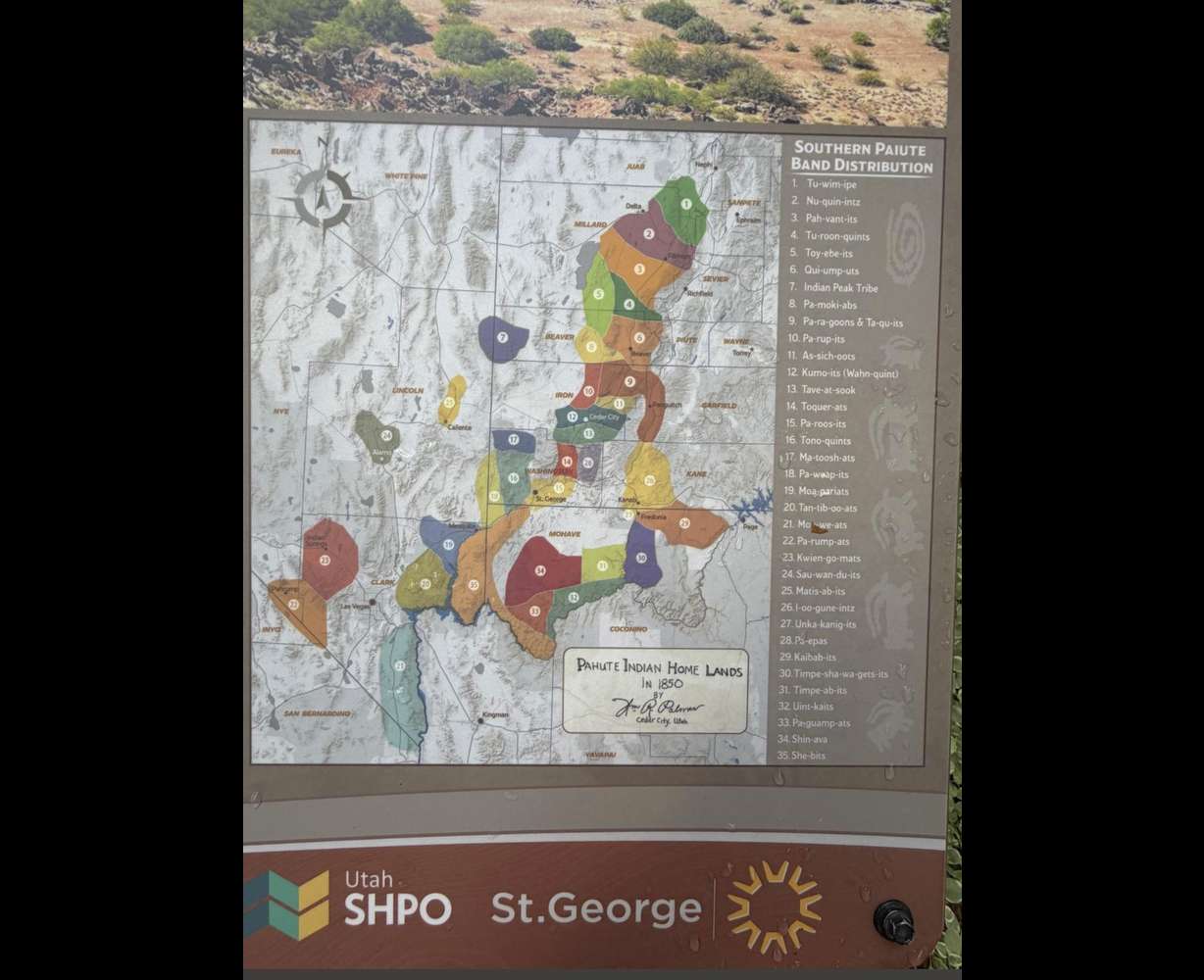
"The proposal did not allow for the centuries the tribe has been caretakers of these lands and we will continue to be for centuries to come," Yellowfoot added. "We hold significant ties to the land, water and natural resources around us ... The tribe's relationship to these lands predates arbitrary county boundaries and zoning designations."
Council member of the Indian Peaks Band Tamra Borchardt-Slayton said that she and other members of the tribe have made efforts to communicate their concerns to commissioners. She also noted that while collaboration and public engagement are "important components and responsible economic development," they "do not replace the formal consultation process owed to the sovereign tribal government."
"(The Indian Peaks Band) and the Paiute Indian Tribe of Utah are not merely another stakeholder or interested community organization," Borchardt-Slayton stated. "It is a federally sovereign government whose people have maintained historical, cultural, spiritual and ancestral connections to these lands since time immemorial. Government-to-government consultation required direct meaningful engagement between government representatives. Such engagement must occur early enough in the decision-making process to allow tribal concerns, traditional knowledge and recommendations to be genuinely considered before decisions become final."
Tribal youth member Chanel Borchardt-Slayton, 17, cited environmental concerns for generations to come, while asking "who will advocate for the community" in the future if there is a potential "fallout."
Commissioners, as well as Iron County Planner Brett Hamilton, addressed concerns brought up in the meeting such a noise and water use, also noting that the commission had added language back into the ordinance draft that had been previously removed regarding a 30-day review timeline for the tribe to provide input.
"I meant to include (that) in the presentation but forgot that portion," he said.
Commissioner Paul Cozzens noted that he used AI during the meeting in order to determine noise levels that large-scale developments might generate, also adding that he "(didn't) think the sound is going to be an issue. Cozzens also noted that water would be metered and regulated.
KSL received a statement from Commissioner Mike Bleak earlier this month, in which he said the commission is working toward a solution that will "protect the way of life that we have come to expect here, while also balancing the rights to develop private property."
"We understand that everyone may not come to the same conclusion as others," the statement continued. "This is an active and open process and has been since day one."
Despite pleas from tribal members and community members to make considerations beforehand, the Iron County Commission moved forward, voting unanimously on its Strategic Development Zone overlay ordinance.
More information on that ordinance can be found on the county's website.