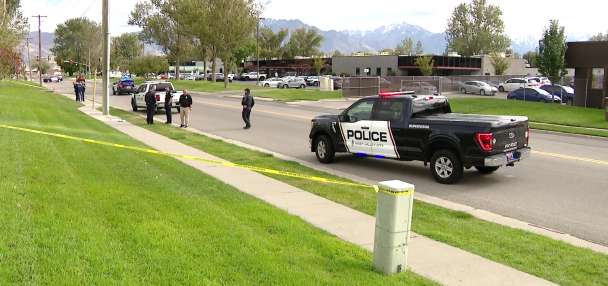

- Salt Lake City Council approved zoning changes for Smith's Ballpark redevelopment on Tuesday.
- The plan includes mixed-use zones, as well as at least 5 acres of open space.
- Residents' feedback led to reduced building heights and increased green space allocation.
SALT LAKE CITY — It's been over two years since the Smith's Ballpark was last home to the Salt Lake Bees, but the site is now another step closer to being the next home for residents and businesses in Utah's capital city.
The Salt Lake City Council voted unanimously Tuesday to adopt a zoning map and zoning text amendment for the old ballpark. It calls for a mix of mixed-use district 8 (MU-8) and mixed-use district 5 (MU-5) on 14.8 acres of land that had mostly been zoned as public land.
MU-8 allows for maximum building heights of up to 95 feet in certain circumstances, per city code, as Salt Lake City seeks to carry out a redevelopment plan that it passed in 2025, calling for a mix of housing, business and other developments, as well as open space.
"It might not (have) every single item that the community was hoping for, but I think that in any process, it's largely holistic and representative of what community members explicitly asked us for," Salt Lake City Council Vice Chairwoman Erika Carlsen, whose district includes Ballpark, told KSL before the vote.
A new zone for Smith's Ballpark redevelopment
What was approved on Tuesday wasn't exactly what Salt Lake City had drawn up for the site since finalizing a vision plan last year for the stadium and its parking lot, both of which are near 1300 S. West Temple.
The plan itself, which centers around partially demolishing the old stadium, marked the end of a process that began when the Bees announced in 2023 that they planned to relocate to South Jordan after the 2024 season.
Initial zoning plans called for mixed-use district 11 (MU-11) and MU-5, which would have led to building heights as high as 150 feet, per current city code. Salt Lake City's planning commission recommended the plan with MU-11 zoning in March.
However, that was met with negative feedback from residents, who said it didn't seem to mesh with the city's recently-approved Ballpark Station Area plan, which added MU-8 zoning to many neighboring blocks. Many residents also voiced concerns about a lack of greenspace in the area.
"We beg you to reduce our heat, to provide recreation for our children, to bring people to our neighborhood for events," said Fraser Nelson, co-chair of the Ballpark Action Team, in March.
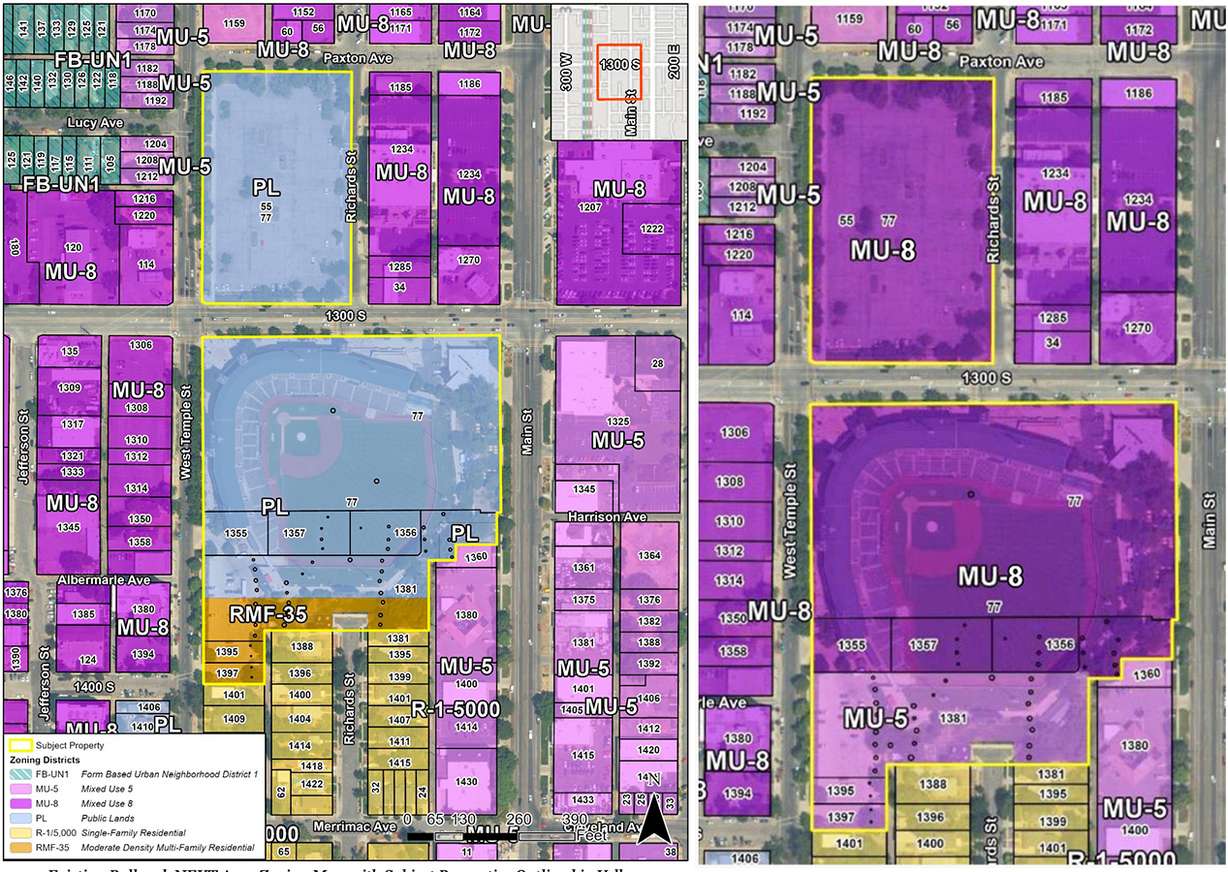
Salt Lake City leaders agreed in July to amend the plan, moving MU-11 areas to MU-8. They also pledged to include at least 5 acres of open space, following ongoing requests by residents, while protecting existing trees in the area.
The feedback was "loud and clear," Carlsen said, noting there's a preference for green space with those 5 acres. The original plan called for 4.8 acres, including using some of the stadium's old playing surface as general open space.
It's unclear where the extra 0.2 acres or more will be added, but she said it will be determined as the vision is carried out, including the spaces around a planned new library or various other developments.
"I appreciate that we've set a floor at 5 acres, and would be happy to see if we continue to increase that," she said, adding it's also just one goal of the site alongside economic opportunities and increasing housing stock, including homeownership.
When will construction begin?
The Salt Lake City Community Reinvestment Agency will oversee future ground leases and other development deals, spurring any new development while the stadium is partially demolished.
It's unclear exactly when all of that will begin.
Despite Tuesday's vote, Carlsen cautions it could still be some time before the vision is fully implemented. It could take five to 10 years for a project of its size to be fully realized, developers warned residents in a panel discussion last year.
"As much as I would love to see the reimagining to happen overnight, that's just not the reality we're up against," she said.
But what helps is that the neighborhood has been a magnet for new development in recent years, and city leaders hope that Smith's Ballpark won't sit vacant for long. The city's vision plan will continue to lead what that development looks like.