'%3e%3cpath%20d='M34.1406%205.85938C30.3906%202.10547%2025.3047%200%2020%200C14.6953%200%209.60938%202.10547%205.85938%205.85938C2.10938%209.61328%200%2014.6953%200%2020C0%2025.3047%202.10547%2030.3906%205.85938%2034.1406C9.61328%2037.8906%2014.6953%2040%2020%2040C25.3047%2040%2030.3906%2037.8945%2034.1406%2034.1406C37.8906%2030.3906%2040%2025.3047%2040%2020C40%2014.6953%2037.8945%209.60938%2034.1406%205.85938ZM37.0117%2023.543H31.1602V13.5391H27.6328V19.9414C28.1211%2020.6914%2028.3711%2021.582%2028.3711%2022.5625V22.625C28.3711%2023.668%2028.1172%2024.6055%2027.6328%2025.4297V26.6094H36.082C33.4883%2032.9375%2027.2891%2037.3789%2020.0039%2037.3789C10.3711%2037.3789%202.62109%2029.6289%202.62109%2020C2.62109%2010.3711%2010.3711%202.62109%2020%202.62109C29.6289%202.62109%2037.3789%2010.3711%2037.3789%2020C37.3789%2021.1484%2037.2617%2022.2656%2037.0508%2023.3477C37.0391%2023.4141%2037.0234%2023.4766%2037.0117%2023.543Z'%20fill='white'/%3e%3cpath%20d='M22.3086%2018.5352C20.4336%2018.125%2019.9531%2017.8398%2019.9766%2017.1836V17.1406C19.9766%2016.6992%2020.3477%2016.2148%2021.4023%2016.2148C22.582%2016.2148%2023.8867%2016.6797%2025.0781%2017.4766L26.8516%2015.0195C25.4453%2013.8906%2023.707%2013.3398%2021.5547%2013.3398C18.5195%2013.3398%2016.4375%2015%2016.4063%2017.4766V17.5352C16.3633%2020.2617%2018.5859%2020.9805%2021.293%2021.6016C23.0391%2021.9766%2023.5703%2022.3164%2023.5703%2022.9609L23.5469%2022.9766C23.5469%2023.3906%2023.2578%2023.7031%2022.7852%2023.8359C22.5742%2023.9062%2022.1289%2023.9727%2021.5156%2023.9727C20.7617%2023.9727%2019.7539%2023.8633%2018.6328%2023.4844C18.0898%2023.2891%2017.4727%2023.0039%2016.8047%2022.6133L20.1406%2026.625C20.2813%2026.6602%2021.0977%2026.8516%2021.7734%2026.8516C25.0039%2026.8516%2027.0859%2025.2461%2027.1094%2022.6328V22.5703C27.1602%2020.1133%2025.2148%2019.1719%2022.3086%2018.5352Z'%20fill='white'/%3e%3cpath%20d='M5.24219%2013.5664V26.6133H8.75391V23.7578L10.2969%2021.9531L14.2031%2026.6133H18.3867L12.3555%2019.5195L17.4023%2013.5664H13.4531L8.75391%2019.0586V13.5664H5.24219Z'%20fill='white'/%3e%3c/g%3e%3cdefs%3e%3cclipPath%20id='clip0_97_2430'%3e%3crect%20width='40'%20height='40'%20fill='white'/%3e%3c/clipPath%3e%3c/defs%3e%3c/svg%3e)


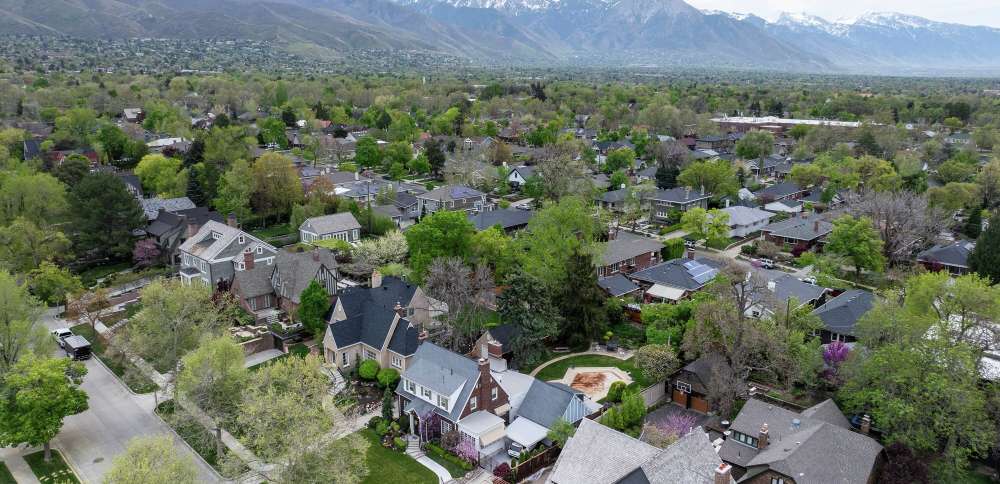
- Salt Lake City's planning commission endorsed the city's proposed new housing ordinance.
- The proposal allows diverse housing types within residential zones, home to about 33,000 properties.
- Concerns include infrastructure strain; City Council will decide next.
SALT LAKE CITY — A proposed ordinance to allow more housing types within the vast majority of Salt Lake City's residential neighborhoods received a key endorsement after another spirited debate between residents split on the plan.
Members of the Salt Lake City Planning Commission voted unanimously Wednesday night to favorably recommend Salt Lake City's proposed "expanding housing options" zoning text amendment, which has been a controversial subject on multiple online forums over the past few weeks.
"I have no idea what the unintended consequences will be. This is going to be completely a trial-and-error kind of thing," said Commissioner Richard Leverett moments before the vote, as he and his colleagues mulled over what notes to send members of the Salt Lake City Council following another spirited public hearing.
A group of supporters attentively watching from the commission's chambers erupted in applause after the measure passed.
The commission makes recommendations on items like zoning changes or text amendments to the City Council, which ultimately has the final say on the matter.
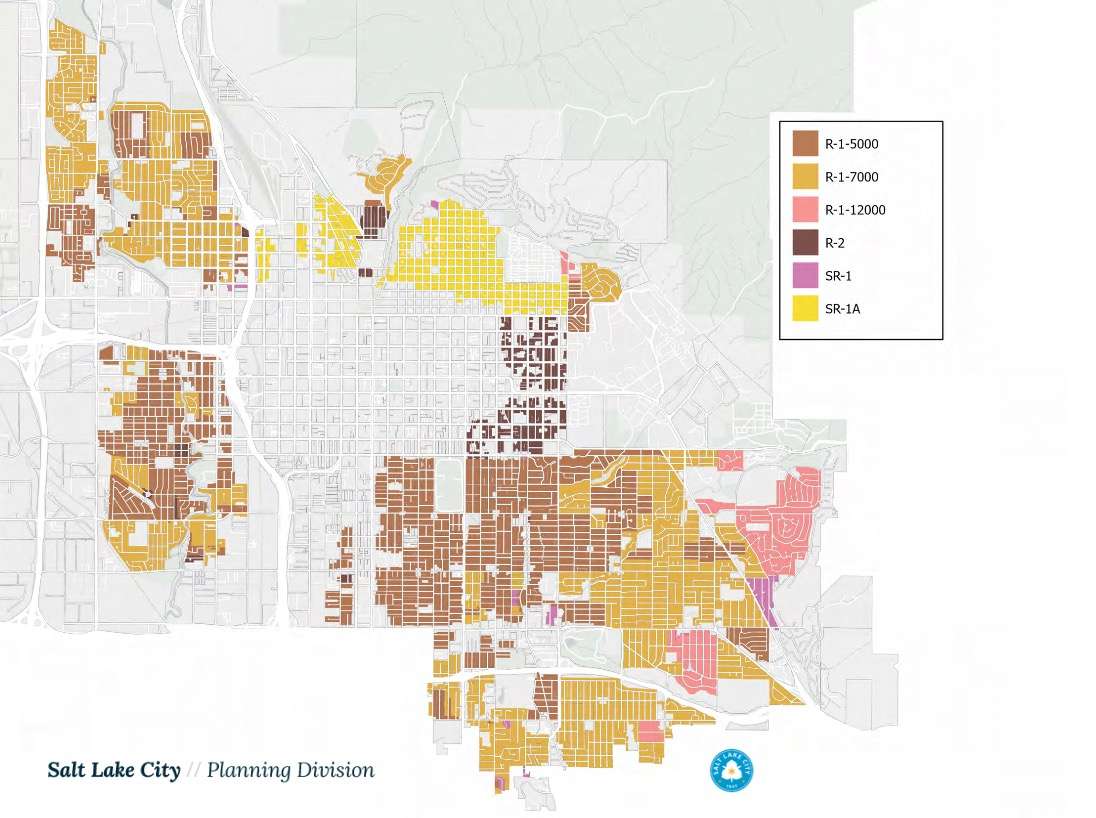
Salt Lake City is proposing a measure that adjusts building sizes and types allowed within six primary residential zones: R-1, R-2, SR-1 and SR-1A, and two subsections of these. Approximately 33,000 properties exist within these zones, which cover three-fourths of all residentially zoned land in the city.
It would allow landowners to build small single-family dwellings, along with duplexes, triplexes, fourplexes and four-unit townhomes, on smaller lots by increasing maximum heights by a few feet. Heights would remain at 30 feet or less in all cases, city planners said.

The idea, city planners said, is to increase the city's housing stock in areas that currently allow only single-family homes. It offers current homeowners more options for what to do with their properties, but wouldn't require them to change their homes.
Planning commissioners were originally scheduled to make their decision during a Sept. 9 meeting, but its members delayed their decision because of a notice error tied to the proposal before the meeting.
Still, dozens of residents spoke in favor of or against the measure. Those in favor say that allowing various housing types could help increase units and decrease housing costs, allowing them and their families to remain in the city.
The University of Utah Kem C. Gardner Policy Institute published a report earlier that day, warning that 91% of renters statewide are priced out of homeownership, listing Salt Lake City as having the seventh-highest median house price among all Utah cities with at least 40,000 residents.
Some also pointed out that the housing mix the proposal calls for already exists in neighborhoods like the Avenues or East Central. A coalition of various housing groups signed a letter in support of the measure.
Those against it were skeptical of any impacts, pointing to other cities with higher density that have worse housing costs. Many cited concerns with parking, water, and other key infrastructure that they believed may not be able to handle additional residents.
Concerns were brought up about how the measure would not stop corporate investors from snatching up properties, which were among the unintended consequences they fear the proposal could cause neighbors. An online petition was even created, urging city leaders to reject the proposal, regardless of the planning commission recommendation.
Wednesday's meeting brought similar arguments from residents who attended. Some argued that if the city adopts the measure, it should remove provisions that allow people to purchase homes with renting options or potentially test the changes in a limited pilot program format before moving it citywide.
Parking immediately jumped out during the commission's pre-vote discussion.
The proposal calls for one parking spot per unit, while city officials noted that any increases to units would require approval from utility providers.
Leverett said he had concerns with the proposed parking requirement, suggesting that it be flexible to the context of the neighborhood over the size of any new development. Some might have no parking requirement, while others might have two per unit, he said. Others favored the proposed one-for-one option.
Commissioner Anna Sullivan also proposed supporting the city's measure with a condition that at least one unit on each site be owner-occupied, but her motion failed.
The commissioner ultimately sided with what was recommended by city planning staff, agreeing that adjustments may be made with time if it is passed by city leaders. It's unclear when the City Council will pick up the measure for consideration.
"Nothing we do is forever," said Commissioner Aimee Burrows. "If this turns out to be crazy, then we change it. ... We can change things."