'%3e%3cpath%20d='M34.1406%205.85938C30.3906%202.10547%2025.3047%200%2020%200C14.6953%200%209.60938%202.10547%205.85938%205.85938C2.10938%209.61328%200%2014.6953%200%2020C0%2025.3047%202.10547%2030.3906%205.85938%2034.1406C9.61328%2037.8906%2014.6953%2040%2020%2040C25.3047%2040%2030.3906%2037.8945%2034.1406%2034.1406C37.8906%2030.3906%2040%2025.3047%2040%2020C40%2014.6953%2037.8945%209.60938%2034.1406%205.85938ZM37.0117%2023.543H31.1602V13.5391H27.6328V19.9414C28.1211%2020.6914%2028.3711%2021.582%2028.3711%2022.5625V22.625C28.3711%2023.668%2028.1172%2024.6055%2027.6328%2025.4297V26.6094H36.082C33.4883%2032.9375%2027.2891%2037.3789%2020.0039%2037.3789C10.3711%2037.3789%202.62109%2029.6289%202.62109%2020C2.62109%2010.3711%2010.3711%202.62109%2020%202.62109C29.6289%202.62109%2037.3789%2010.3711%2037.3789%2020C37.3789%2021.1484%2037.2617%2022.2656%2037.0508%2023.3477C37.0391%2023.4141%2037.0234%2023.4766%2037.0117%2023.543Z'%20fill='white'/%3e%3cpath%20d='M22.3086%2018.5352C20.4336%2018.125%2019.9531%2017.8398%2019.9766%2017.1836V17.1406C19.9766%2016.6992%2020.3477%2016.2148%2021.4023%2016.2148C22.582%2016.2148%2023.8867%2016.6797%2025.0781%2017.4766L26.8516%2015.0195C25.4453%2013.8906%2023.707%2013.3398%2021.5547%2013.3398C18.5195%2013.3398%2016.4375%2015%2016.4063%2017.4766V17.5352C16.3633%2020.2617%2018.5859%2020.9805%2021.293%2021.6016C23.0391%2021.9766%2023.5703%2022.3164%2023.5703%2022.9609L23.5469%2022.9766C23.5469%2023.3906%2023.2578%2023.7031%2022.7852%2023.8359C22.5742%2023.9062%2022.1289%2023.9727%2021.5156%2023.9727C20.7617%2023.9727%2019.7539%2023.8633%2018.6328%2023.4844C18.0898%2023.2891%2017.4727%2023.0039%2016.8047%2022.6133L20.1406%2026.625C20.2813%2026.6602%2021.0977%2026.8516%2021.7734%2026.8516C25.0039%2026.8516%2027.0859%2025.2461%2027.1094%2022.6328V22.5703C27.1602%2020.1133%2025.2148%2019.1719%2022.3086%2018.5352Z'%20fill='white'/%3e%3cpath%20d='M5.24219%2013.5664V26.6133H8.75391V23.7578L10.2969%2021.9531L14.2031%2026.6133H18.3867L12.3555%2019.5195L17.4023%2013.5664H13.4531L8.75391%2019.0586V13.5664H5.24219Z'%20fill='white'/%3e%3c/g%3e%3cdefs%3e%3cclipPath%20id='clip0_97_2430'%3e%3crect%20width='40'%20height='40'%20fill='white'/%3e%3c/clipPath%3e%3c/defs%3e%3c/svg%3e)


- A temporary roadway is taking shape atop the bed of Pineview Reservoir to aid in installation of a new pipeline section that will haul drinking water.
- The reservoir had to be partially drained as part of the effort.
- The Pineview initiative is part of the broader $100 million upgrade of the 6.4-mile pipeline hauling water from Pineview to Ogden.
OGDEN VALLEY, Weber County — A new roadway is taking shape atop the bed of Pineview Reservoir as efforts to install a new water pipeline across a narrow section of the lake edge move forward.
With Pineview largely drained, it's one of the initial steps in the process of putting the new pipeline section in place, one element of the $100 million project to replace 6.4 miles of aging pipeline from a well field adjacent to Pineview west through the Ogden Canyon to Ogden. Justin Anderson, who heads the Ogden Public Services Department, met Friday with reporters to provide an update on the project.
"The timeline to be able to complete this section of the project is January 1. We expect to be completed and out of here so that the reservoir will be able to begin filling up," he said. The overall project, installation of the 6.4 miles of new pipeline, is expected to finish in early 2029.
Ogden officials have stressed the importance of the overall $100 million project in assuring the supply of drinking water to city residents. The drawdown of Pineview to allow for installation of the new pipeline segment, though, has perhaps drawn the most public attention and interest.
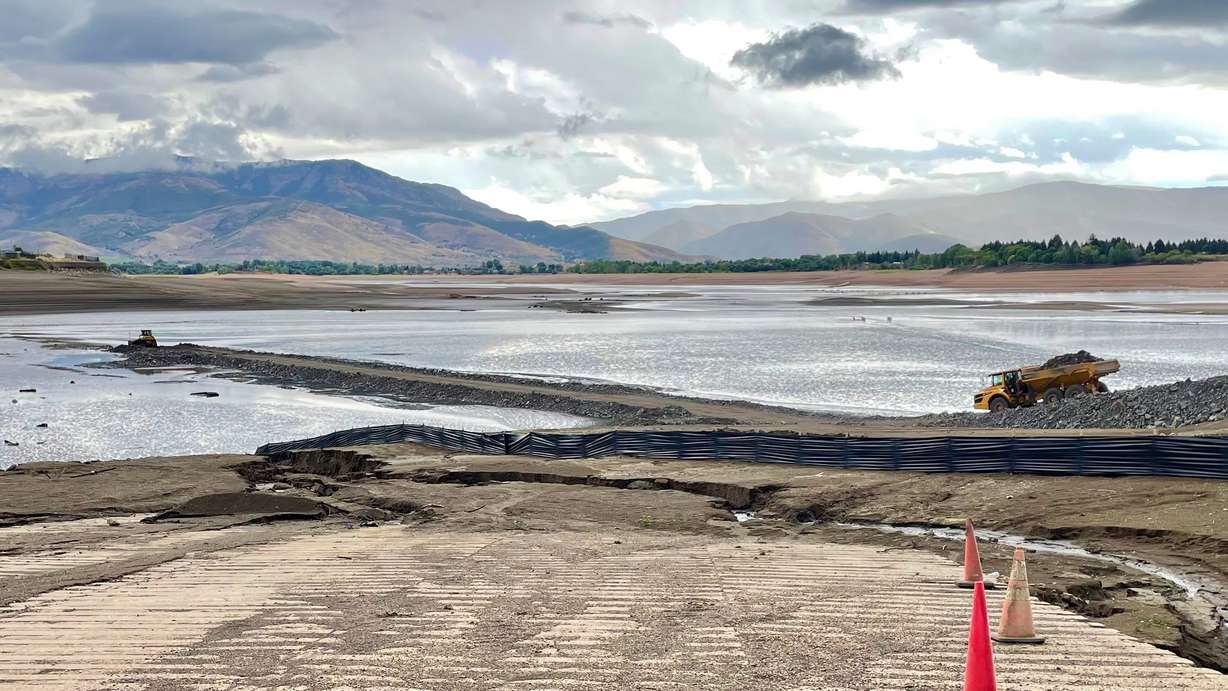
City officials announced last June that the Pineview level would be dramatically lowered so the new pipeline section could be installed between Port Ramp Marina to a series of well fields on a peninsula across a relatively narrow section of the reservoir. Water remains in the more westerly section of the reservoir, but the area where the new pipeline is to be installed is sufficiently drained, and work to build the roadway on the Pineview bed so workers can access the spot started last Monday.
As Anderson addressed reporters from the Port Ramp Marina boat ramp abutting Pineview, a large truck hauled material along the growing roadway taking shape in the middle of the reservoir bed to build it up. The roadway will extend all the way across the bed of Pineview to create a firm base for the equipment to be used to dig a trench where the new pipeline section will be placed.
"The new pipeline will be buried," Anderson said, like the existing section of pipeline.
He said a temporary pipeline will be placed atop the bed of Pineview to keep the water flowing to Ogden as the existing pipeline section is rehabilitated and the new segment is installed. The rehabbed pipeline section will create "redundancy" going forward, complementing the new pipeline section.
"Instead of having just one pipeline cross under the reservoir, we will have two," Anderson said.
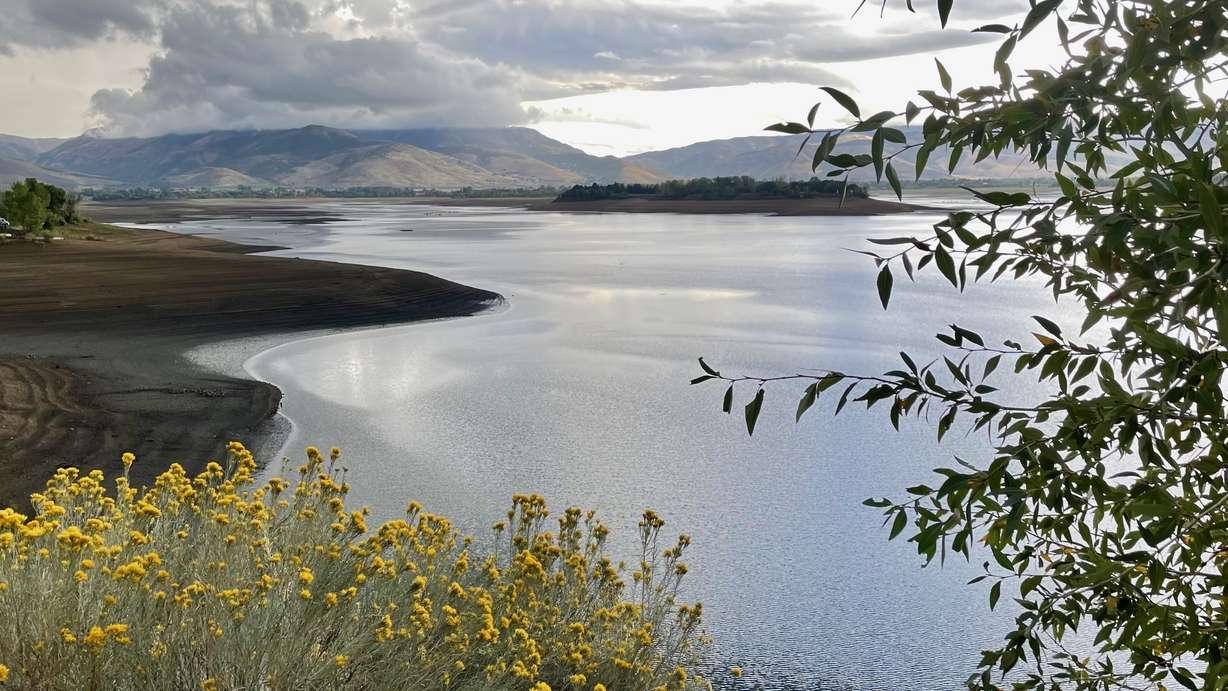
Come January, after the new pipeline section is installed across Pineview, it will be up to Mother Nature to refill the reservoir. The rate at which it's replenished will depend on the amount of snowfall the watershed area around it receives in the coming winter. A "normal water year" can fill Pineview, according to Anderson.
Whatever the case, low snowfall last winter, translating into minimal water inflow into Pineview over the summer, figured in the timing of the drawdown of the lake. Better to drain the water level when it's already naturally low, officials reasoned. Some of the water drawn out of Pineview was sent to be stored in Willard Bay, and some may make its way to the Great Salt Lake.
With the Pineview water level so low, Utah officials will install more than 1,000 "habitat structures" to help the fish population rebound in the reservoir once it fills back up.

Related stories
Most recent Weber County stories
Related topics
 Tim Vandenack