'%3e%3cpath%20d='M34.1406%205.85938C30.3906%202.10547%2025.3047%200%2020%200C14.6953%200%209.60938%202.10547%205.85938%205.85938C2.10938%209.61328%200%2014.6953%200%2020C0%2025.3047%202.10547%2030.3906%205.85938%2034.1406C9.61328%2037.8906%2014.6953%2040%2020%2040C25.3047%2040%2030.3906%2037.8945%2034.1406%2034.1406C37.8906%2030.3906%2040%2025.3047%2040%2020C40%2014.6953%2037.8945%209.60938%2034.1406%205.85938ZM37.0117%2023.543H31.1602V13.5391H27.6328V19.9414C28.1211%2020.6914%2028.3711%2021.582%2028.3711%2022.5625V22.625C28.3711%2023.668%2028.1172%2024.6055%2027.6328%2025.4297V26.6094H36.082C33.4883%2032.9375%2027.2891%2037.3789%2020.0039%2037.3789C10.3711%2037.3789%202.62109%2029.6289%202.62109%2020C2.62109%2010.3711%2010.3711%202.62109%2020%202.62109C29.6289%202.62109%2037.3789%2010.3711%2037.3789%2020C37.3789%2021.1484%2037.2617%2022.2656%2037.0508%2023.3477C37.0391%2023.4141%2037.0234%2023.4766%2037.0117%2023.543Z'%20fill='white'/%3e%3cpath%20d='M22.3086%2018.5352C20.4336%2018.125%2019.9531%2017.8398%2019.9766%2017.1836V17.1406C19.9766%2016.6992%2020.3477%2016.2148%2021.4023%2016.2148C22.582%2016.2148%2023.8867%2016.6797%2025.0781%2017.4766L26.8516%2015.0195C25.4453%2013.8906%2023.707%2013.3398%2021.5547%2013.3398C18.5195%2013.3398%2016.4375%2015%2016.4063%2017.4766V17.5352C16.3633%2020.2617%2018.5859%2020.9805%2021.293%2021.6016C23.0391%2021.9766%2023.5703%2022.3164%2023.5703%2022.9609L23.5469%2022.9766C23.5469%2023.3906%2023.2578%2023.7031%2022.7852%2023.8359C22.5742%2023.9062%2022.1289%2023.9727%2021.5156%2023.9727C20.7617%2023.9727%2019.7539%2023.8633%2018.6328%2023.4844C18.0898%2023.2891%2017.4727%2023.0039%2016.8047%2022.6133L20.1406%2026.625C20.2813%2026.6602%2021.0977%2026.8516%2021.7734%2026.8516C25.0039%2026.8516%2027.0859%2025.2461%2027.1094%2022.6328V22.5703C27.1602%2020.1133%2025.2148%2019.1719%2022.3086%2018.5352Z'%20fill='white'/%3e%3cpath%20d='M5.24219%2013.5664V26.6133H8.75391V23.7578L10.2969%2021.9531L14.2031%2026.6133H18.3867L12.3555%2019.5195L17.4023%2013.5664H13.4531L8.75391%2019.0586V13.5664H5.24219Z'%20fill='white'/%3e%3c/g%3e%3cdefs%3e%3cclipPath%20id='clip0_97_2430'%3e%3crect%20width='40'%20height='40'%20fill='white'/%3e%3c/clipPath%3e%3c/defs%3e%3c/svg%3e)



- Alisha Raymond, a special needs teacher, overcame multiple organ failures to pursue teaching.
- Despite health challenges, she connects deeply with students at Panorama Elementary in St. George.
- Raymond is diagnosed with POTS and other conditions; friends are fundraising for a service dog and other medical-related needs.
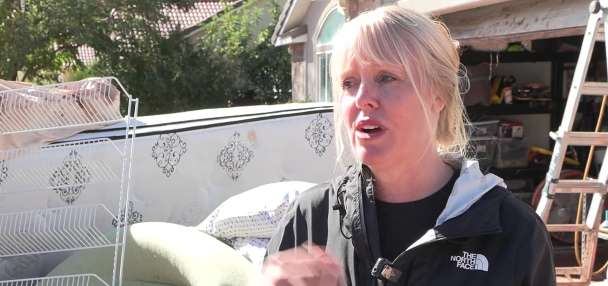
ST. GEORGE — Five years ago, Alisha Raymond found herself experiencing multiple organ failures, yet she had one thing on here mind: She wanted to help children.
Raymond is a special needs teacher at Panorama Elementary in St. George, working with students with mild-to-moderate disabilities, and she started this journey when she wasn't sure she had much time left to live.
"I really love the kids that need the most love, and those who may be a little bit harder to see past the behaviors to see the amazing kid underneath," she told KSL.
Five years ago, Raymond was on a trip to Lagoon with her son when she found herself feeling nauseous.
"By the time we went from St. George to Salt Lake, I was so sick, and I said that we better do the aquarium instead," she recalled. "We met up with my mom and went to the aquarium, and I had to leave early, and we went to a local hospital in Tooele, and by the time we got there, they said that I was in multisystem organ failure."
Raymond has had health issues since she was a child, and she said that doctors never quite knew what was happening. She said she was often told she needed to see a "psychiatrist, not a doctor."
At the age of 19, she had her first liver failure after having her first child, which doctors told her was likely a result of having her gallbladder removed not long before.
The next liver failure came years later, after her third child was born, and after having heart surgery. Doctors said food poisoning was the cause. She said doctors didn't take the matter more seriously, likely because her body would "self-correct."
The third time happened five years ago, and doctors feared the worst.
"When I got to the hospital, they said, 'We don't think your family is going to make it here to say goodbye.'"
Raymond is married and has four children, whom she said she couldn't bear to have to say goodbye to.
"I was very, very sick, and I spent a couple of weeks getting stabilized before they sent me home on comfort care, and they said, 'You're not going to make it,'" she recalled. "I spent about a year trying to recover. I had a feeding tube, and I lost more than 100 pounds. I had to relearn how to walk, talk, eat — all the things, but I'm far too stubborn to die.
'There's nothing I don't love about my job'
"I ended up recovering, and at that point, I decided that I wanted to go to school to be a teacher."
Raymond had been working as a substitute teacher for years and went back to school to get her degree and teaching license. She taught fifth grade before moving to special education.
"There's nothing I don't love about my job, and it's really scary to be faced with the idea that I won't be able to go in and take care of my kids anymore," she said.
Rebecca Juarez has been working alongside Raymond in the special education department at Panorama for several years, and said that she is an "amazing advocate for students."
"She is able to connect with them in very unique ways, and it's been really neat to watch her help these kids who may not have met the right person to connect with," Juarez said.
"She had a student who was just busy, busy all the time, and up on his feet," she added. "Alisha got him a standing desk and was able to track down a small walking treadmill for under his desk. He stood on that treadmill and walked. He made so much progress because she was able to figure out a way to help him work through his need to always move. It was really cool. Those are the things she does."
Despite the challenges Raymond was facing, she continued to go to work, and during her time off, she did all she could to be there for her own family. In fact, a little over a year ago, she went to visit her mom in Georgia, when it happened again.
"I got some blood work done and was told that everything looked great and doctors cleared me to go," she said. "Five days later, I ended up in organ failure in Georgia and got put in the ICU.
"Three weeks after it happened, I went back to school as a teacher and just kind of worked through it."
Juarez said that watching her friend struggle with her health has been really hard.
"When her symptoms started flaring up, she was really worried about not being able to come back this year," Juarez said. "She came back with a lot of assistive devices, like a wheelchair and walker for mobility, and gave it 1,000% until her doctors told her she had to take a break."
Some answers and community support
Doctors have recently found some answers to what might be going on with Raymond, but she said her health has significantly declined over the past year.
"The current working theory is that I have something called postural orthostatic tachycardia syndrome (POTS), which is a nervous system disorder that causes a large, rapid spike in heart rate when you move from sitting or lying down to standing up.
"When I go from sitting to standing, my heart rate will go from 75 beats per minute to 200 or more beats a minute within minutes," she said. "That also causes my blood pressure to drop out from under me."
Aside from POTS, she said that she has pancreatitis, Type 2 diabetes, and a condition called MCAS, which is where immune cells release too many chemicals, causing severe allergy-like symptoms across multiple body systems.
To help with this, she is hoping to get a medical alert dog, which is among the many things not covered by insurance. Friends have started a fundraising page* to help with that. More than anything, Raymond misses her students.
"It just really broke her heart that she had to leave school this year because she sees the need that we have for someone who is able to connect with the kids and able to advocate for them and teach them how to advocate for themselves," Juarez said. "Now she's at home thinking nonstop about Panorama.
"There aren't very many teachers who can do what she does."
*KSL.com does not assure that the money deposited to the account will be applied for the benefit of the persons named as beneficiaries. If you are considering a deposit to the account, you should consult your own advisers and otherwise proceed at your own risk.