'%3e%3cpath%20d='M34.1406%205.85938C30.3906%202.10547%2025.3047%200%2020%200C14.6953%200%209.60938%202.10547%205.85938%205.85938C2.10938%209.61328%200%2014.6953%200%2020C0%2025.3047%202.10547%2030.3906%205.85938%2034.1406C9.61328%2037.8906%2014.6953%2040%2020%2040C25.3047%2040%2030.3906%2037.8945%2034.1406%2034.1406C37.8906%2030.3906%2040%2025.3047%2040%2020C40%2014.6953%2037.8945%209.60938%2034.1406%205.85938ZM37.0117%2023.543H31.1602V13.5391H27.6328V19.9414C28.1211%2020.6914%2028.3711%2021.582%2028.3711%2022.5625V22.625C28.3711%2023.668%2028.1172%2024.6055%2027.6328%2025.4297V26.6094H36.082C33.4883%2032.9375%2027.2891%2037.3789%2020.0039%2037.3789C10.3711%2037.3789%202.62109%2029.6289%202.62109%2020C2.62109%2010.3711%2010.3711%202.62109%2020%202.62109C29.6289%202.62109%2037.3789%2010.3711%2037.3789%2020C37.3789%2021.1484%2037.2617%2022.2656%2037.0508%2023.3477C37.0391%2023.4141%2037.0234%2023.4766%2037.0117%2023.543Z'%20fill='white'/%3e%3cpath%20d='M22.3086%2018.5352C20.4336%2018.125%2019.9531%2017.8398%2019.9766%2017.1836V17.1406C19.9766%2016.6992%2020.3477%2016.2148%2021.4023%2016.2148C22.582%2016.2148%2023.8867%2016.6797%2025.0781%2017.4766L26.8516%2015.0195C25.4453%2013.8906%2023.707%2013.3398%2021.5547%2013.3398C18.5195%2013.3398%2016.4375%2015%2016.4063%2017.4766V17.5352C16.3633%2020.2617%2018.5859%2020.9805%2021.293%2021.6016C23.0391%2021.9766%2023.5703%2022.3164%2023.5703%2022.9609L23.5469%2022.9766C23.5469%2023.3906%2023.2578%2023.7031%2022.7852%2023.8359C22.5742%2023.9062%2022.1289%2023.9727%2021.5156%2023.9727C20.7617%2023.9727%2019.7539%2023.8633%2018.6328%2023.4844C18.0898%2023.2891%2017.4727%2023.0039%2016.8047%2022.6133L20.1406%2026.625C20.2813%2026.6602%2021.0977%2026.8516%2021.7734%2026.8516C25.0039%2026.8516%2027.0859%2025.2461%2027.1094%2022.6328V22.5703C27.1602%2020.1133%2025.2148%2019.1719%2022.3086%2018.5352Z'%20fill='white'/%3e%3cpath%20d='M5.24219%2013.5664V26.6133H8.75391V23.7578L10.2969%2021.9531L14.2031%2026.6133H18.3867L12.3555%2019.5195L17.4023%2013.5664H13.4531L8.75391%2019.0586V13.5664H5.24219Z'%20fill='white'/%3e%3c/g%3e%3cdefs%3e%3cclipPath%20id='clip0_97_2430'%3e%3crect%20width='40'%20height='40'%20fill='white'/%3e%3c/clipPath%3e%3c/defs%3e%3c/svg%3e)


Estimated read time: 4-5 minutes
- The Blackfoot Elks Lodge organizes the Eastern Idaho State Fair's demolition derby.
- The event raises $50,000-$75,000 annually for Bingham County youth programs and scholarships.
- Volunteers prepare for nine months, with the derby being the fair's grand finale.
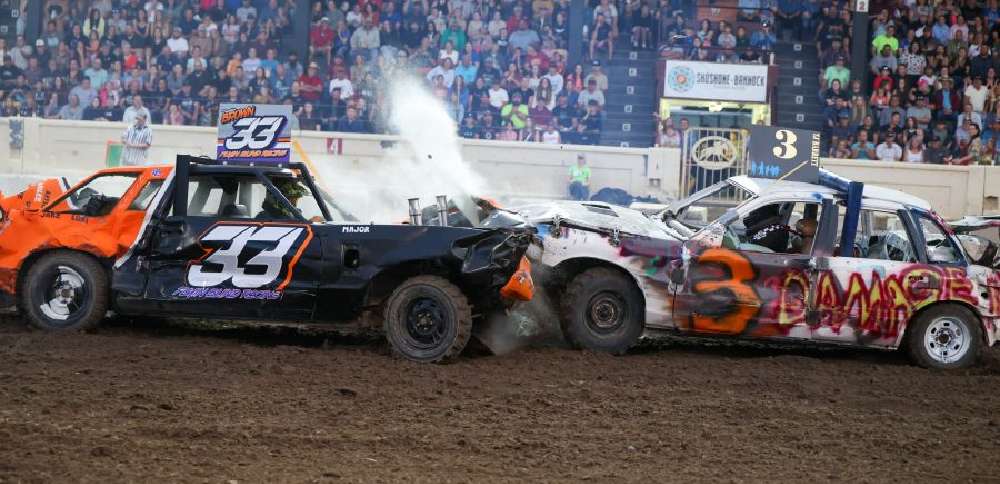
BLACKFOOT — For more than 50 years, the roar of engines and crunch of metal at the Eastern Idaho State Fair's Demolition Derby have drawn thousands of spectators to the grandstands as the final event at the fair each year.
But what many fairgoers may not realize is how much work goes on behind the scenes long before the first car enters the arena, who actually runs the derby, and how much the event gives back to the community.
The derby, known as the September Slam, is organized and run by volunteers from Blackfoot Elks Lodge #1416 in conjunction with the Eastern Idaho State Fair. Blackfoot Elks Lodge received its charter in 1922 and has centered its community service around charity, youth, and veterans.
While the event takes place just once a year and has traditionally served as its final grandstand show, the Elks spend roughly nine months preparing for it.
The derby is the lodge's largest annual youth fundraiser, generating thousands of dollars to support scholarships and youth programs throughout Bingham County.
Tom Chavez and Renny Hill have both been derby drivers and longtime members of the board of directors. They reflected on the derby and what it means to them and the east Idaho community.
Published accounts date the derby to 1974. However, Chavez and Hill believe it actually started in 1972, when longtime derby enthusiast and organizer Jake Bartausky's father rode in it.
It has since become one of the fair's most popular traditions, regularly drawing packed grandstands. Drivers come from throughout Idaho and across the country, with some traveling from as far away as South Carolina to compete.
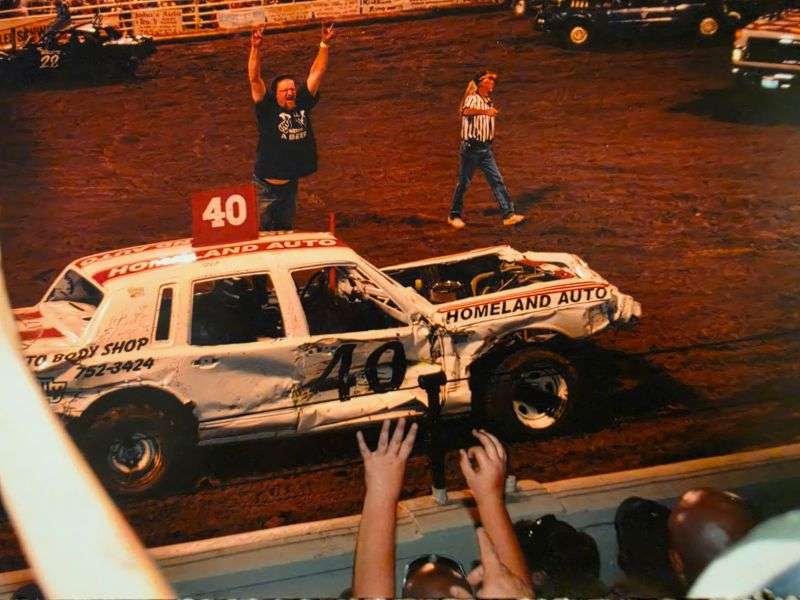
Chavez said that in the more than 10 years he has served on the board, the event has consistently sold out.
In a demolition derby, drivers compete in specially prepared cars inside a dirt arena, deliberately crashing into one another to disable opponents while keeping their own vehicles running.
Drivers often use the rear of their cars to deliver hits, helping protect critical components in the front. Cars are eliminated when they can no longer move or make contact within the required time, with the last car still running typically declared the winner.
"I believe it's the atmosphere and energy of the final night at the fair, the DJs, the giveaways, the sponsors and the drivers that keep the event moving," he said. "There is a great camaraderie of friendships at the derby."
How the derby has changed
Hill said the sport has changed considerably over the years, particularly when it comes to the cars. What once might have been a $500 derby car can now represent an investment of up to $50,000.
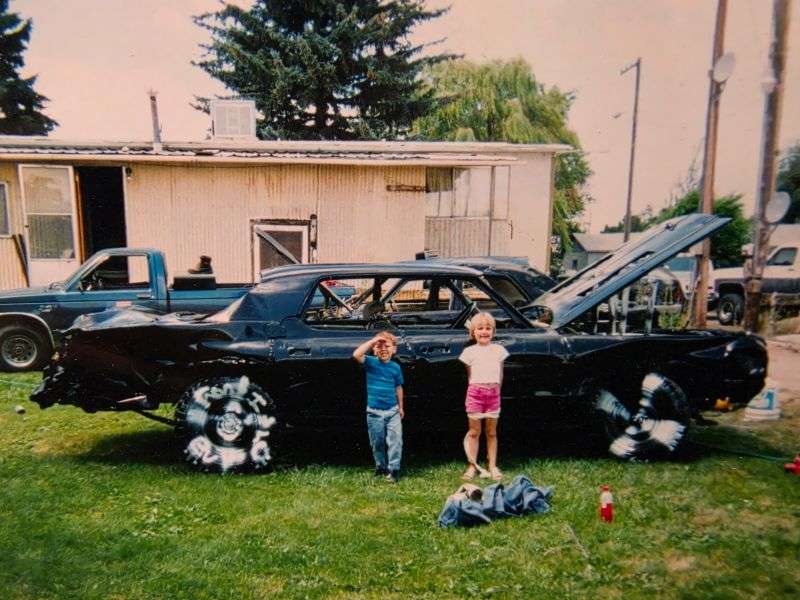
Derby driving has also traditionally been a family affair, Hill said, with multiple generations sometimes participating. In years past, the Blackfoot derby also featured a women-only heat known as the Powder Puff Derby.
As the cost and durability of derby cars increased and participation in the Powder Puff declined, the separate heat was eventually discontinued.
"Back when cars didn't cost as much to build, we considered them used up after one or two heats," Hill said. "So the guys would let their wives drive or sell the car for that heat and get it back. With the cost of the cars nowadays and the way we build them, they can last multiple shows. So, selling them for a Powder Puff is too expensive."
Hill said the Powder Puff once attracted 20 to 30 drivers, but participation eventually dwindled to about five.
"We no longer run a Powder Puff heat due to lack of entries," he said. "Now the women run with everyone else and some of them do pretty good."
Giving back to Bingham County youth
Behind all that crashing, however, is a volunteer effort that helps keep Bingham County youth programs running long after the fairgrounds go quiet.
Both Chavez and Hill agree that the behind-the-scenes work by as many as 40 volunteers is extensive.
"No one makes a dime on this," Hill said. "We work on this about eight or nine months out of the year, and as soon as it's over, we put our heads together to discuss how it went, what other derbies are doing, and how we can make it better the next year."
Chavez said the payoff makes all that work worthwhile. The derby raises roughly $50,000 to $75,000 each year, with proceeds going directly to programs benefiting Bingham County youth, including the Elks Hoop Shoot and Soccer Shoot, youth sports, drug awareness efforts, a dictionary program and Distinguished Young Women, among others.
"There are many scholarships given out from the derby proceeds that people don't even hear about," he added.
This year's derby
Organizers are also working to make this year's opening ceremony especially memorable in recognition of America's 250th anniversary.
The fair runs Sept. 4 to Sept. 12, with the derby continuing its longtime tradition as the fair's grand finale on Saturday, Sept. 12. The action begins at 7:30 p.m., with grandstand gates opening at 6:30 p.m.
For ticket information go to: funatthefair.com
For more information, visit blackfootdemoderby.com or follow September SLAM, Blackfoot Elks Demo Derby on Facebook.