'%3e%3cpath%20d='M34.1406%205.85938C30.3906%202.10547%2025.3047%200%2020%200C14.6953%200%209.60938%202.10547%205.85938%205.85938C2.10938%209.61328%200%2014.6953%200%2020C0%2025.3047%202.10547%2030.3906%205.85938%2034.1406C9.61328%2037.8906%2014.6953%2040%2020%2040C25.3047%2040%2030.3906%2037.8945%2034.1406%2034.1406C37.8906%2030.3906%2040%2025.3047%2040%2020C40%2014.6953%2037.8945%209.60938%2034.1406%205.85938ZM37.0117%2023.543H31.1602V13.5391H27.6328V19.9414C28.1211%2020.6914%2028.3711%2021.582%2028.3711%2022.5625V22.625C28.3711%2023.668%2028.1172%2024.6055%2027.6328%2025.4297V26.6094H36.082C33.4883%2032.9375%2027.2891%2037.3789%2020.0039%2037.3789C10.3711%2037.3789%202.62109%2029.6289%202.62109%2020C2.62109%2010.3711%2010.3711%202.62109%2020%202.62109C29.6289%202.62109%2037.3789%2010.3711%2037.3789%2020C37.3789%2021.1484%2037.2617%2022.2656%2037.0508%2023.3477C37.0391%2023.4141%2037.0234%2023.4766%2037.0117%2023.543Z'%20fill='white'/%3e%3cpath%20d='M22.3086%2018.5352C20.4336%2018.125%2019.9531%2017.8398%2019.9766%2017.1836V17.1406C19.9766%2016.6992%2020.3477%2016.2148%2021.4023%2016.2148C22.582%2016.2148%2023.8867%2016.6797%2025.0781%2017.4766L26.8516%2015.0195C25.4453%2013.8906%2023.707%2013.3398%2021.5547%2013.3398C18.5195%2013.3398%2016.4375%2015%2016.4063%2017.4766V17.5352C16.3633%2020.2617%2018.5859%2020.9805%2021.293%2021.6016C23.0391%2021.9766%2023.5703%2022.3164%2023.5703%2022.9609L23.5469%2022.9766C23.5469%2023.3906%2023.2578%2023.7031%2022.7852%2023.8359C22.5742%2023.9062%2022.1289%2023.9727%2021.5156%2023.9727C20.7617%2023.9727%2019.7539%2023.8633%2018.6328%2023.4844C18.0898%2023.2891%2017.4727%2023.0039%2016.8047%2022.6133L20.1406%2026.625C20.2813%2026.6602%2021.0977%2026.8516%2021.7734%2026.8516C25.0039%2026.8516%2027.0859%2025.2461%2027.1094%2022.6328V22.5703C27.1602%2020.1133%2025.2148%2019.1719%2022.3086%2018.5352Z'%20fill='white'/%3e%3cpath%20d='M5.24219%2013.5664V26.6133H8.75391V23.7578L10.2969%2021.9531L14.2031%2026.6133H18.3867L12.3555%2019.5195L17.4023%2013.5664H13.4531L8.75391%2019.0586V13.5664H5.24219Z'%20fill='white'/%3e%3c/g%3e%3cdefs%3e%3cclipPath%20id='clip0_97_2430'%3e%3crect%20width='40'%20height='40'%20fill='white'/%3e%3c/clipPath%3e%3c/defs%3e%3c/svg%3e)


- Some Salt Lake City leaders still support Rio Grande Plan despite a recent setback.
- A community board recently focused on other east-west connection solutions, citing costs.
- The vote doesn't exclude the Rio Grande Plan concept entirely from solution plan, which is still being crafted.
SALT LAKE CITY — An ambitious plan to bury railroad lines that cross through the middle of Salt Lake City may not be among the pursued transportation solutions to solve the city's long east-west gap.
However, multiple city leaders hope it's not the end of the discussion, even if they agree it will require help from beyond the city.
The "Rio Grande Plan" failed to advance in the West-East Connections Study, or "WE Connect," during a recent community advisory board meeting tied to the study. The board, made up of westside residents, preferred to focus the remainder of the study on "looking more deeply at the feasibility and costs of other solutions," said Sofia Jeremias, spokeswoman for the Salt Lake City Department of Community and Neighborhoods.
"The (board) voted to focus the remainder of the study resources on corridor treatments that center on improved crossings at specific intersections. They are also looking at solutions outside of the transportation realm, like encouraging the development of new amenities on the west side," she said.
A group of Salt Lake City residents first proposed the Rio Grande Plan in 2023, calling for the railroad corridor west of downtown to be moved underground via a train box. It would help reduce congestion created by stopped trains, while also opening up about 75 acres of new land for development, they said.
Such a plan would be costly, estimated at $3 billion to $5 billion or more to construct, although Friends of the Rio Grande, the group behind the plan, outlined economic benefits from it. An economic analysis compiled by Utah State University researchers last year found that it has the potential to generate $12.3 billion in economic impacts.
The project has received endorsements from city and county leaders, while the group has even presented state leaders about the concept.
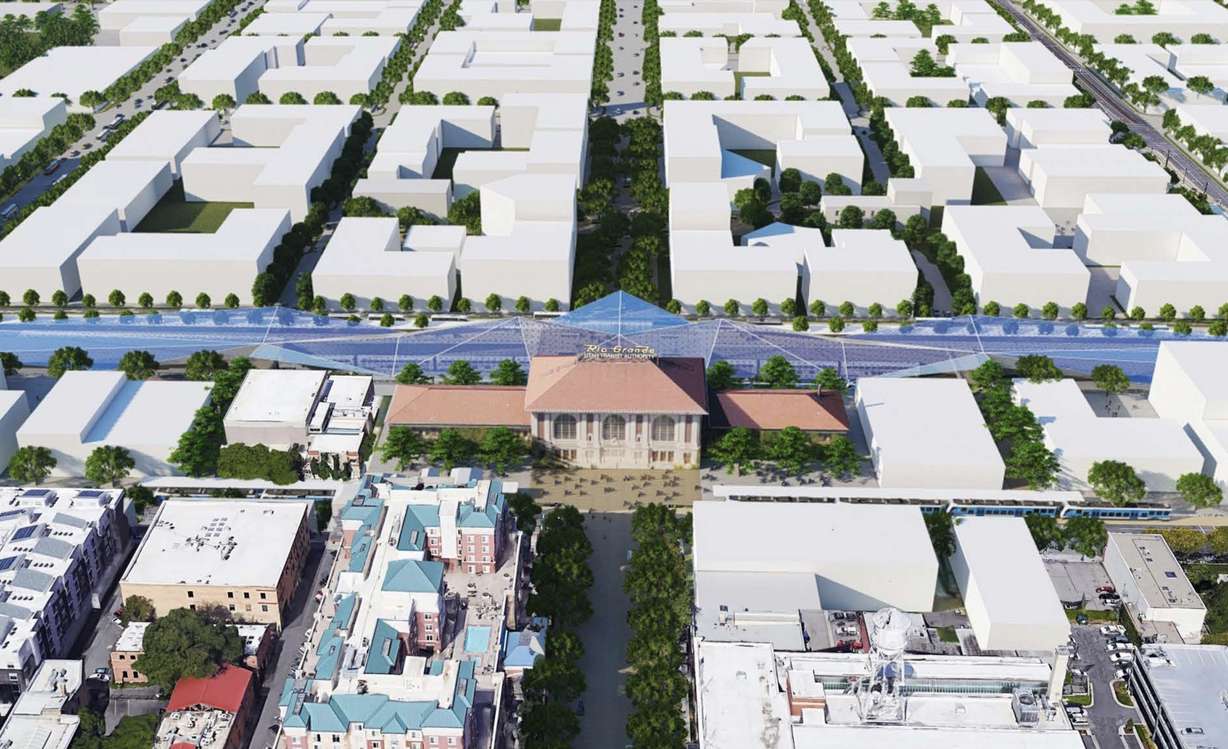
As they advocated for the project, Salt Lake City launched its WE Connect study after receiving federal funding to find ways to address transportation challenges created by the railroad and freeways that separate the city's east and west sides. A rough draft of the study is expected to be unveiled later this summer, when the public will be able to comment on it.
Beyond cost, there were "significant questions" about other elements, including how to handle groundwater issues in the area, who would pay for adjacent properties within the project area and who would own and maintain the train box facility, leading to the decision to look at other options, Jeremias said.
Friends of the Rio Grande Depot wrote earlier this month that they were "disappointed" by the decision.
"We continue to believe that, by burying the rails over a multitude of crossings at once, the Rio Grande Plan will provide better outcomes for residents than piecemeal grade separations using bridges or undercrossings," it wrote in a statement.
While the community board's vote is a blow to the Rio Grande Plan being included in the study, the study is also not complete, and Salt Lake City has yet to finalize a list of solutions, said Andrew Wittenberg, a spokesman for the Salt Lake City Mayor's Office.
Thus, he said the Rio Grande Plan hasn't officially been excluded from the study. Transportation planners are just exploring "the feasibility of smaller, strategic interventions" instead, following the board's vote.
"The mayor still supports exploring viable options, but a project of that size and cost would require state, federal and private landowners' partnership to succeed. ... That does not mean the Rio Grande Plan won't be included in the final plan; it is just not the team's focus right now," Wittenberg told KSL on Tuesday.
Salt Lake City Councilman Dan Dugan, who sometimes comes to council work sessions with a mug reading "bury the rails," told KSL earlier this month that he was also disheartened by the recent setback.
But he believes the potential benefits need to be considered at some level, even if the cost and logistics mean federal, state and private support would be needed to turn it into reality, noting that the freeway system was also costly when it was first built in the 1960s.
Overpasses and underpasses to connect the east and west sides, Dugan said, could end up as expensive or worse over time. He'd like to see the Rio Grande Plan serve as a "viable alternative" that remains close to conversation about projects linking the east and west sides, if it's not included in WE Connect.
"I don't think we should just look at the price; we should look at all the benefits," he said.