- Salt Lake City received an $11.5 million grant from the Bezos Earth Fund.
- The funds will enhance the 9-Line Trail and develop a new 2.4-acre park.
- City leaders say the project will help the spaces be more usable and welcoming.
SALT LAKE CITY — The 9-Line Trail is about to get greener while a new green space is also built in the area.
Salt Lake City is receiving an $11.5 million grant from the Bezos Earth Fund, most of which will help Utah's capital city convert 3.2 acres of "underutilized gravel" along nearly 10 blocks of the 9-Line Trail into a shaded urban forest and waterwise gardens, the organization announced on Tuesday.
Approximately $2 million of the funds will also go toward developing green space within a 2.4-acre park within the city's Fleet Block project, located across the street from the 900 South trail, near 300 West.
In a statement, Salt Lake City Mayor Erin Mendenhall celebrated the grant award, saying that the projects will make both spaces "more welcoming, more usable and more connected."
"Trees, plants, and shade change how a place feels. They tell families they can stay a little longer, give people walking and biking a safer trip, and make it easier for customers to keep showing up for local businesses in the heat of summer," she said.
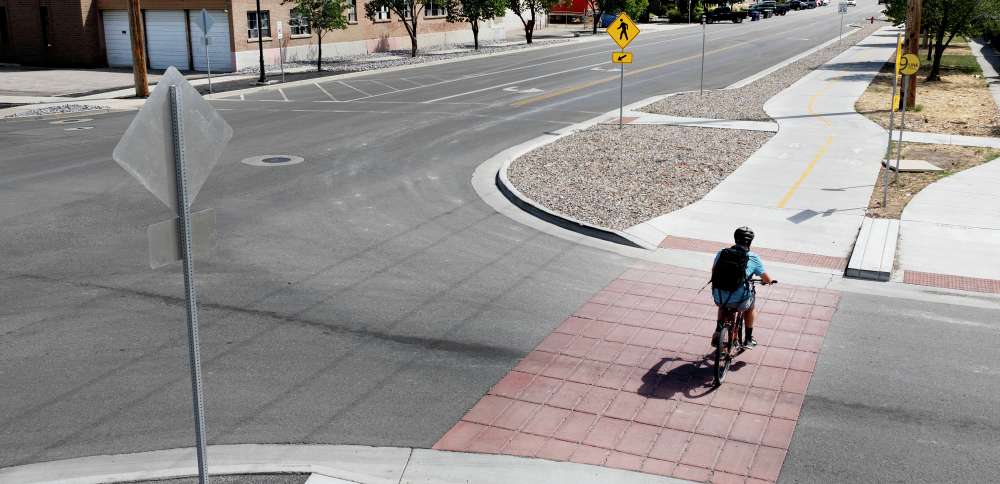
The 9-Line Trail currently runs from the Jordan River Surplus Canal by the Poplar Grove-Glendale border west of Redwood Road to 1100 East, ending at Out of the Blue in the 9th & 9th neighborhood. It received its eastward expansion through a series of road projects Salt Lake City completed in recent years.
City officials now estimate that over 500,000 bike riders and pedestrians use the trail, even with its lack of shade in many parts. They said Tuesday that they plan to plant 285 trees and 350 water-wise shrubs that will provide shade along the trail, which should cool it down and also improve the city's air quality over time.
A water-smart drip irrigation system, along with new soil, benches, tables and wayfinding signs, will also be included in the project.
"The 9-Line Trail has quickly become one of Salt Lake City's most loved and well-used public spaces, and this investment will make it even better," said Blake Thomas, Salt Lake City's senior adviser on real estate and capital projects.
He added that he's just as excited for the Fleet Block open space, which will be located near the 9-Line and the city's 300 West bike lane, which was extended closer to downtown over the past year.
Salt Lake City's public lands department unveiled a preliminary rendering of what the space could look like during an open house on the project in March. It could feature a lawn surrounded by trees and other natural elements, as well as a small amphitheater lawn and stormwater garden.
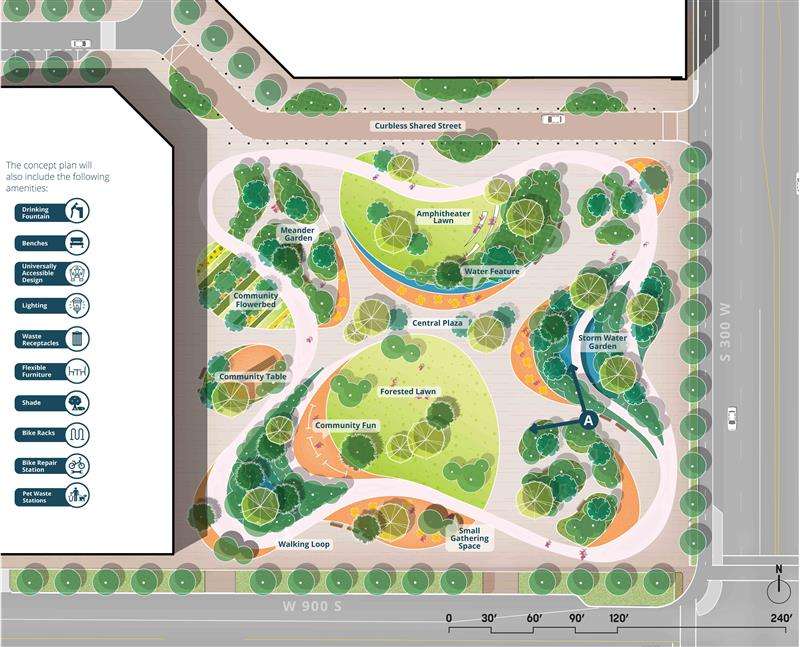
It aims to close a "green space desert" within the city, as an old industrial hub in the city is converted into more housing and commercial spaces, said Makayla Maponga, a planner for Salt Lake City Public Lands.
"There was already a huge deficit and a huge need here, so I think right now we're just focused on trying to provide as much as we can in this space," she said at the time.
The project previously received $6 million from a bond that residents passed in 2022 for park improvements across the city. Construction of the open space is expected to begin as early as next year.
Salt Lake City was one of eight U.S. cities to receive funding from its "Greening America's Cities" program this year. Amazon founder Jeff Bezos created the Bezos Earth Fund through a $10 billion philanthropic commitment seeking to combat growing climate challenges.
In all, $100 million was doled out to the cities for various projects. All of the projects seek to improve green spaces by offering more places to cool down and get shade, said Tom Taylor, CEO and president of the Bezos Earth Fund, in a statement.
"Those places shouldn't be a luxury," he added. "Our hope is that these projects serve as a blueprint for turning vacant land into community assets and encourage even more investment in green spaces — from government, philanthropy, and others — in cities across the country."