- Community efforts are underway to support families displaced by the Cottonwood Fire.
- Firefighters face challenges with 70,992 acres burned and 0% containment as of Thursday.
- Rapid Extrication Module Support teams are deployed for enhanced safety amid extreme fire activity.
BEAVER — Community efforts were taking shape to support families displaced by the Cottonwood Fire, as firefighters expressed concerns about anticipated thunderstorms.
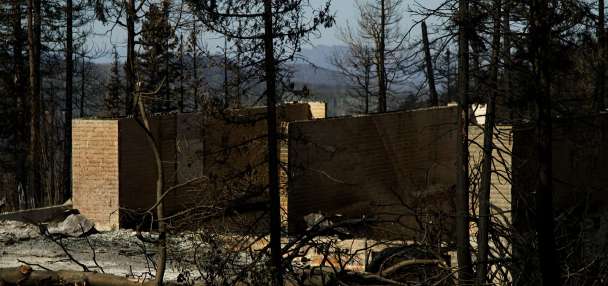
On Thursday morning, crews estimated the Cottonwood Fire had burned 70,992 acres since it started Monday and was 0% contained, while community leaders said they believed "dozens" of cabins and condos had burned.
Community volunteer Mo Larsen said she believed roughly a dozen individuals and families were displaced by the fire when it burned their primary residences.
"There are some that need hotels, there are some that need trailers to stay in," Larsen said. "There are families that have gone to Colorado, so (they need) gas money and food and groceries and stuff. There are people who left with nothing but a suitcase or a grocery bag of their clothes because they didn't think it would be this bad."
For them, Larsen said volunteers in conjunction with city leaders and the BIG (Beaver, Iron and Garfield counties) Chamber of Commerce had organized accounts where those inside and outside the community could donate, including via the Cottonwood Account at Utah Independent Bank and the Big Chamber Fire Account at the State Bank of Southern Utah.
Larsen said she, too, lost a condo in the fire, and her new home was within 2 miles of where the fire started. She has been working to coordinate with the families who lost their homes.
"Our heart is still in the canyon, so I can relate to the people who have lost everything—their jobs and their homes and all of their precious items," Larsen said. "I'm able to relate with them and cry with them."
Specialized crews deploy to support firefighting efforts
Meanwhile, Great Basin Team 5 fire spokesperson Alyssa Mason said Rapid Extrication Module Support (REMS) teams were expected to arrive Thursday to support firefighters in the field as they became more aggressive in their attack and moved into more remote areas.
"What they do is they come in with this, like, super modified off-road equipment, and they're usually climbing specialists," Mason explained during an interview with KSL. "They're good at airlifts. They're good at pretty much anything you could ever need in a search and rescue operation. We never want to put firefighters in an unsafe situation, but it just gives us a little bit more peace of mind that they can go a little bit farther from the road, they can go into some of these harder to reach areas with these medical teams behind them, because if somebody gets hurt, they can remove the hurt firefighter from the area very quickly, get them back to the ground where we can either get them an ambulance or a helicopter to them and get them to the hospital."
Mason said there were ongoing concerns about the unpredictability of the firefighting conditions.
"We definitely have extreme fire activity," said Alyssa Mason, fire spokesperson with Great Basin Team 5. "Originally, when this fire started, they were seeing spotting up to a mile ahead of the fire, and when you have 130-foot flames being just propelled by winds in the teens and higher, you really can't put a firefighter in front of that, because if something goes wrong, they're not going to be able to get out of the way in time."
Mason said thunderstorms expected in the area Thursday evening had the potential to increase volatility for firefighters.
"That definitely, probably has some of them nervous," Mason said during an interview with KSL 5. "There's some lightning potential—which we try to pull people back, get them to a safe place during lightning—but I think everyone's pretty on edge. We've seen this fire get up and move the last couple days, and we had a calm day yesterday, a calm day this morning, but we know the potential is there."