- Allen Park, known as 'Hobbitville,' reopens with a celebration on Saturday.
- The park was closed for irrigation upgrades.
- Construction for further upgrades are expected to start in 2027, costing about $5.2 million.
SALT LAKE CITY — One of Utah's more unique city parks is reopening after a monthslong project to set the groundwork for its rehabilitation, and visitors can see what's next for it this weekend.
Allen Park, often referred to as "Hobbitville," is reopening with a celebration on Saturday. Salt Lake City Department of Public Lands, Tracy Aviary, Preservation Utah and Westminster University plan to provide treats and all-age activities for visitors to the park, 1328 E. Allen Park Drive, from 10 a.m. to noon.
History tours of the 95-year-old former residence-turned-public park will begin at 10:30 a.m. and 11:30 a.m.
Some areas typically fenced off, such as the park's gazebo and a wooden bridge over Emigration Creek, will be open to the public during the free event. People are encouraged to park at Westminster University and cross 1300 East to get to the park. Dogs are not allowed at the park.
Visitors will also receive a glimpse of the park's future at the event.
"The open house really is to share Phase 1 plans ... and to highlight the theme of the adaptive reuse management plan of arts and sciences in the wild," said Amy Reid, associate landscape architect for Salt Lake City Public Lands.
New park upgrades
The park has been closed since late last year so crews could install new fire, irrigation and culinary water systems for the trees and vegetation, aiming to improve fire safety in the area. It was considered "Phase Zero" of the long-term plan for the 95-year-old space, which was finalized in 2024.
Crews previously cleared brush to reduce fire threats after Salt Lake City Mayor Erin Mendenhall called for a review of city-owned properties following a fire that destroyed two Millcreek apartment buildings last summer. Since the park had no irrigation system, the city had to hand-water trees, too.
The project was originally slated to wrap up earlier this spring, but it was delayed by a mix of weather and unexpected surprises discovered once crews began digging, Reid said. Old bottles and a few other interesting artifacts were discovered during the excavation, some of which will be on display, she added.
Crews will return to the park this fall to demolish five buildings slated for removal as part of the project's first phase, but the brunt of the work will take place next year.
The project's first phase calls for the replacement of a creek culvert to address stormwater management and erosion concerns related to Emigration Creek. It also calls for an entirely new park road with better turnaround points for firefighters, as well as new gathering areas and meadow space.
"We're opening a lot more of the site to the public," Reid said. "We're really excited about that."
The project's exact costs and timelines are still being sorted out. The Salt Lake City Department of Public Utilities will assist with the culvert replacement and recommends that any creek work take place in the late summer or fall of 2027, when creek levels are generally lowest.
Construction could start sometime around then. Reid estimates the full project could take nine months to complete, but that's subject to change. Either way, construction is expected to create an extended closure of the park once it begins.
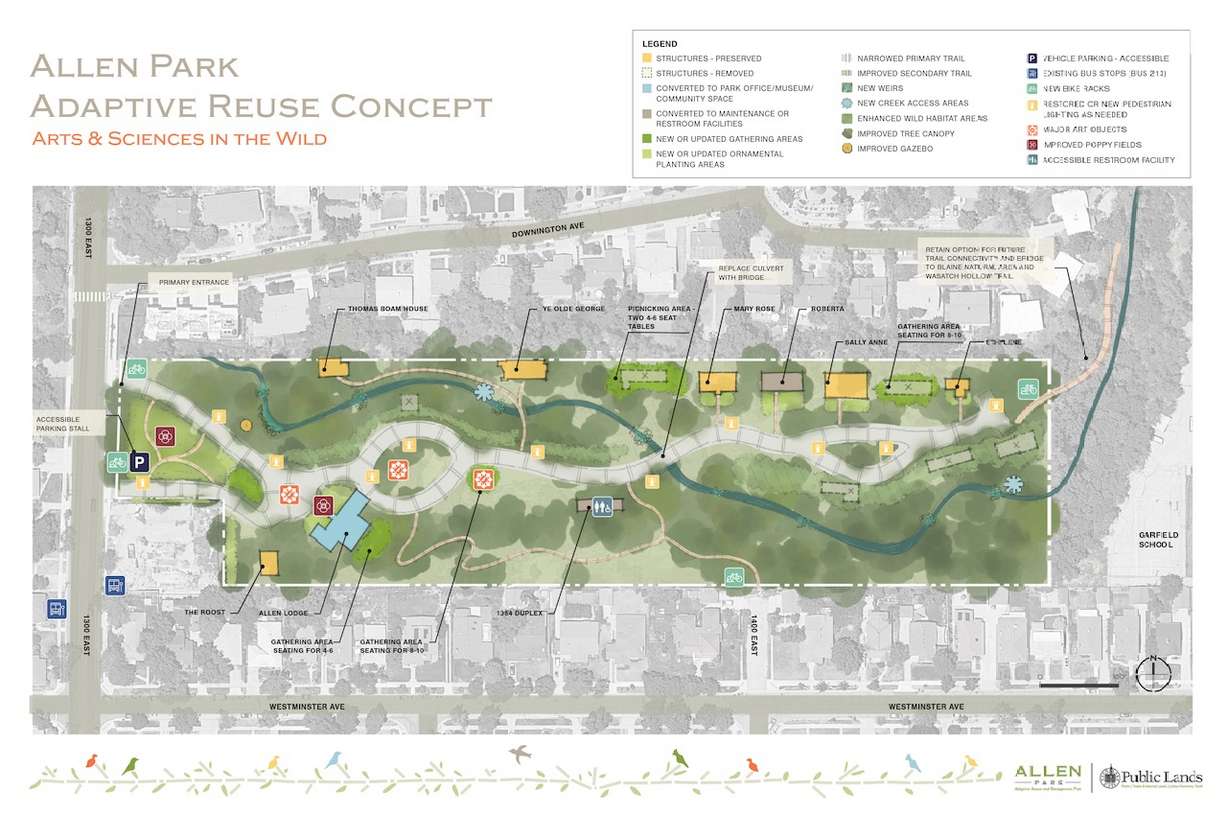
It's tentatively slated to cost $5.2 million, including work already completed. Most of it will be paid through a general obligation bond that city residents approved for park projects across the city in 2022, but Salt Lake City Public Utilities is also covering some of the costs.
A long-term vision
Implementing other elements of the long-term park vision, including renovating the remaining park buildings and turning them into a space for "arts and sciences in the wild," is subject to funding. Completing the full vision of the adaptive reuse and management plan was previously estimated to cost between $19 million and $25 million.
Salt Lake City acquired the 7-acre Allen Park for $7.5 million in 2020, using fees from new buildings to expand public facilities like parks.
George Allen, a former president of a Utah zoological society, and Ruth Larsen Allen purchased the property in 1931 and used a good portion of the space for their exotic bird collection, while adding small houses and many unique literature-themed artworks.
The Allens opened the space to the public on Sundays for decades until George Allen died in the 1960s. The city swooped in and purchased it amid concerns that the unique space could be redeveloped.