Estimated read time: 4-5 minutes
- Utah Sen. Kathleen Riebe, a Democrat, announced plans to run for the 1st District U.S. House seat.
- Her decision comes two days after a Utah judge's controversial decision accepting a map that redraws the boundaries of the state's four U.S. House districts.
- Riebe is vying for what is perhaps the most Democratic-leaning of the four districts.
SALT LAKE CITY — With a judge's controversial decision that essentially redraws Utah's four congressional districts, a Democratic state senator has announced plans to run for what is perhaps the most Democratic-leaning of the posts.
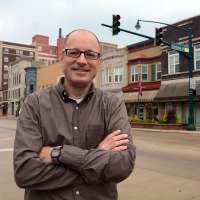
Utah Sen. Kathleen Riebe, D-Cottonwood Heights, announced Wednesday that she'll run for the 1st District seat, which covers much of Salt Lake County, with a focus on fighting high prices and rising health care costs. Her formal announcement comes two days after 3rd District Judge Dianna Gibson's controversial decision to approve a congressional map that creates the new boundaries for Utah's four U.S. House seats.
"Right now, working families are being left behind by Washington. Republicans promised to bring prices down, but instead costs have gone up with Trump's reckless tariffs, and Republicans have slashed health care — all to give tax breaks to billionaires," Riebe said in a statement. She was "frustrated" by the decision of a handful of Senate Democrats to vote with the Republican majority for a plan to end the federal government shutdown because the deal doesn't extend subsidies for health insurance offered on the federal Health Insurance Marketplace.
Riebe's announcement may not be the last among Utah Democrats. Ben McAdams, the last Democrat to hold a U.S. House seat in Utah, has been rumored as a possible House candidate, and Riebe's campaign is expecting more interest in the seat. "She's expecting it to be pretty competitive," said Kennedie Starr, assisting with Riebe's campaign launch.
U.S. Rep. Blake Moore, R-Salt Lake City, now holds the 1st District seat, though the new boundaries are dramatically different from the existing boundaries.
Even as Democrats seemingly jockey to run for Congress, Utah Republicans are fuming over Gibson's decision on Monday. In accepting an alternative congressional map as part of a long-simmering court fight over alleged gerrymandering of the state's U.S. House districts, the judge rejected a proposal put forward by the Republican-led Utah Legislature. Some observers said the GOP-crafted map gave the edge to Republicans, while Republicans accused Gibson of judicial overreach and said the map she approved amounts to gerrymandering.
The redistricting fight may not be over, with Republicans mulling legal action to counter Gibson's ruling. But campaign season ahead of the 2026 elections is lurching forward, and Riebe made no mention of the controversy over the new boundaries, focusing instead on her message. The Utah state senator had been mulling a House bid regardless of Monday's decision by Gibson.
"It's become evident that in order to change what we get out of Washington, we have to change the kind of representatives we send there. In Congress, I'll never back down from the fight to lower costs and increase health care affordability — and I won't take a dime of corporate PAC money, so I'm only accountable to the people who sent me," Riebe said in her statement. "I know how to get things accomplished in a divided government, and I'm ready to make Washington work for working families in Utah."
Riebe, who has served in the Utah Senate since 2019, is an educator, currently working as a digital teaching and learning coach for Northeastern Utah Educational Services. She unsuccessfully vied in a special election in 2023 for the 2nd District U.S. House seat, losing to Celeste Maloy, the Republican who now holds the seat.
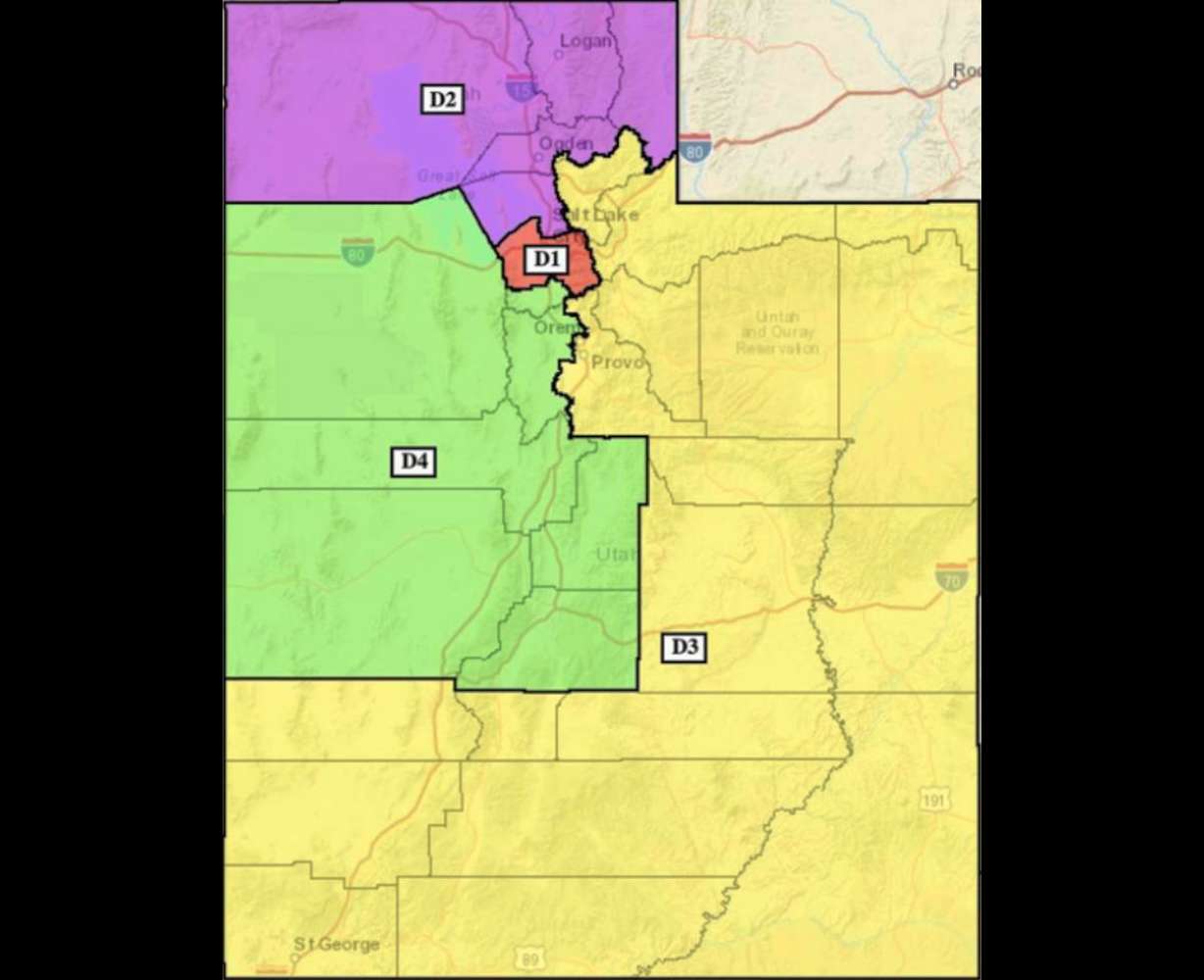
The congressional map accepted by Gibson leaves Salt Lake County mostly intact within the 1st District, while most areas south of Midvale fall into the 4th District, along with parts of Utah County and central Utah. Salt Lake County is a relatively Democratic stronghold in Utah. The 2nd District would cover most areas north of Salt Lake County, including Weber and Davis counties, while the 3rd District encompasses the rest of the state, including Provo and the Wasatch Back, as well as eastern and southern Utah.
Other hopefuls
McAdams hasn't publicly revealed his plans, but he filed a statement of candidacy with the Federal Election Commission on Oct. 16 stating his plans to run for the 4th District seat, now held by Rep. Burgess Owens, a Republican. The filing came before Gibson's ruling. McAdams held the 4th District seat for a term before losing to Owens in 2020.
According to Federal Election Commission records, Democrat Jonathan Larsen and independent Steven Burt also plan to run for the 4th District post.
Moore plans to run for the 1st District seat as well as another Democrat, Anthony Tomkins, commission records show. McAdams formally announced his plans Thursday to run for the post as well.
Four Democrats plan to challenge Maloy for the 2nd District seat: Tyler Farnsworth, Jarom Gillins, Peter Crosby and Steven Merrill.
Rep. Mike Kennedy, a Republican and the incumbent 3rd District House member, is the only candidate so far for that seat, according to online commission records.
Correction: This story has been corrected to reflect that Peter Crosby is running for the 2nd District U.S. House seat, not the 1st District post as previously stated.