- Salt Lake City will host a Team USA viewing party for the 2026 Winter Olympics.
- The event will feature Olympic screenings, food drinks and activities at Washington Square.
- Input on how to shape the 2034 Winter Olympics in Salt Lake City will also take place.
SALT LAKE CITY — Utah's capital city won't host the Winter Olympic and Paralympic Games until 2034, a little more than 3,000 days away for anyone counting.
The city, however, wants to draw in the Olympic spirit a bit sooner with a large event beginning 100 days from now.
Salt Lake City will host a large Team USA viewing party for the upcoming 2026 Milano Cortina Winter Olympic and Paralympic Games, while it continues to prepare to host the global event in 2034, said Salt Lake City Mayor Erin Mendenhall, as she stood in front of a mix of red, white and blue balloons while surrounded by past Olympians.
The free event will take place at Washington Square and Library Square (near 200 East and 400 South) throughout the Milano Cortina 2026 Winter Olympic and Paralympic Games, which run from Feb. 6-26, 2026, and March 6-15, 2026. On top of large screens to view Olympic events, there will be music and live performances, activities for all ages, warming stations and food trucks.
Events with past Olympians and Paralympians are also planned, with current Team USA athletes if available.
"Salt Lake City wants to host all of Team USA's fans, family and friends to watch every single night of the Olympic and Paralympic Games in Milano Cortina right here outside of Washington Square," she said. "Whether you live in rural Utah, live in the state of Maine or Washington state, if you're a Team USA fan who lives in Brazil — if you're not heading to Italy ... you need to be here with us."
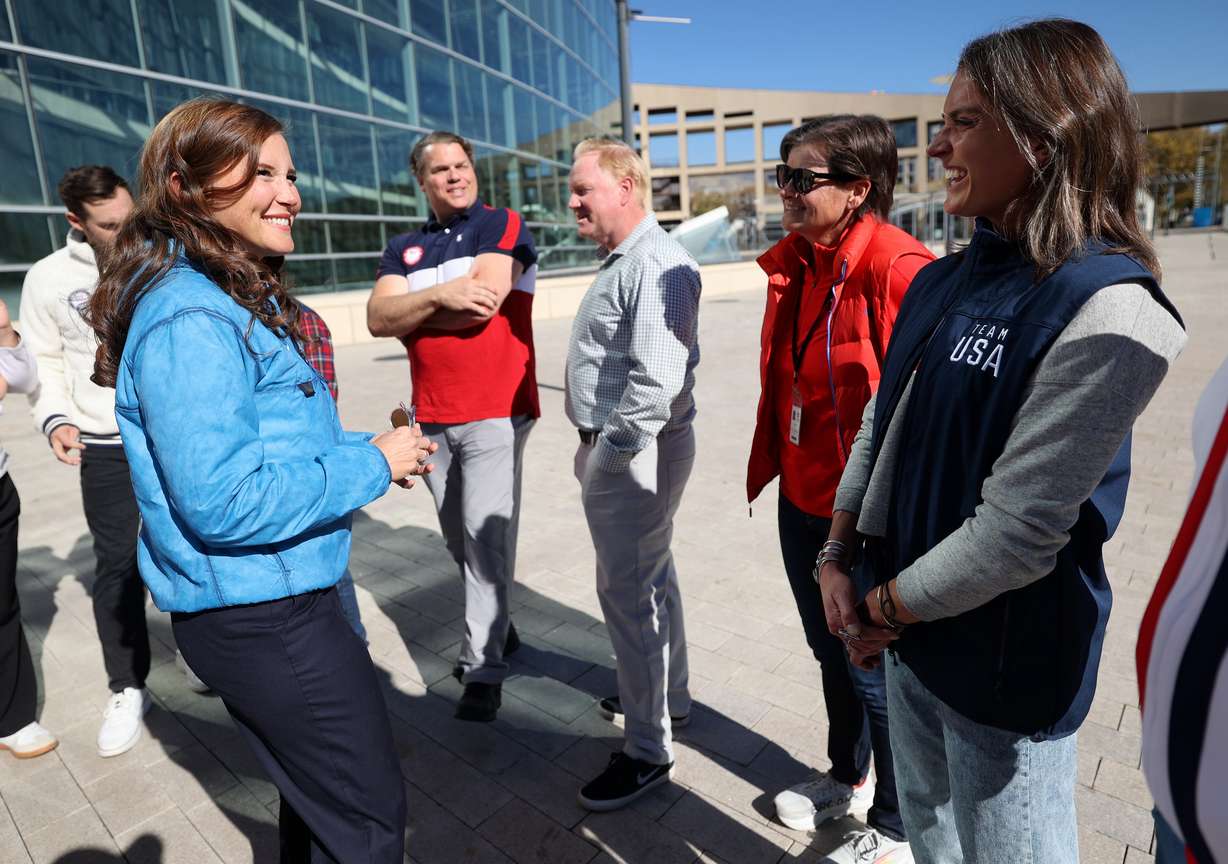
Salt Lake City struck a deal with Dragonfli Media to organize the event, which will be similar to a viewing event that brought thousands when the International Olympic Committee named Salt Lake City as the host of the 2034 Winter Olympics and Paralympics last year.
Every night may have a different theme to match whatever event is happening that day, said Mike Jaquet, chief revenue officer for the Salt Lake City-based event production company. That means bobsled activities and appearances by former Team USA bobsled competitors may dominate one day, while another day might focus more on various skiing events.
Exact scheduling details are still being worked on, but he said 200 East will likely be shut down at times for events to maximize the space in the viewing areas. The ultimate goal is to offer a piece of the real thing coming in 2034, especially since the state has grown since it first hosted the Winter Olympics in 2002, and many residents haven't experienced a Salt Lake City Olympics in person.
"I know a lot of people, like myself included, can't wait for 2034, so we're excited to integrate a bunch of that feel of watching things together as a community," he told KSL.com.
Tristan Gale still remembers where she sat at Washington Square when the city hosted a viewing party in 1995 for the IOC announcement that Salt Lake City would host the Winter Olympics in 2002. She'd later go on to win a gold medal in the first-ever women's skeleton event once the Games took place.
With so many Olympic venues still accessible and the Olympic spirit alive again, she believes some kids who attend the 2026 watch party may ultimately become inspired and go on to become competitors themselves in 2034.
"The Olympic spirit is so catchable," she said. "Everybody loves the Games. It is still something that brings the entire world together, no matter what."
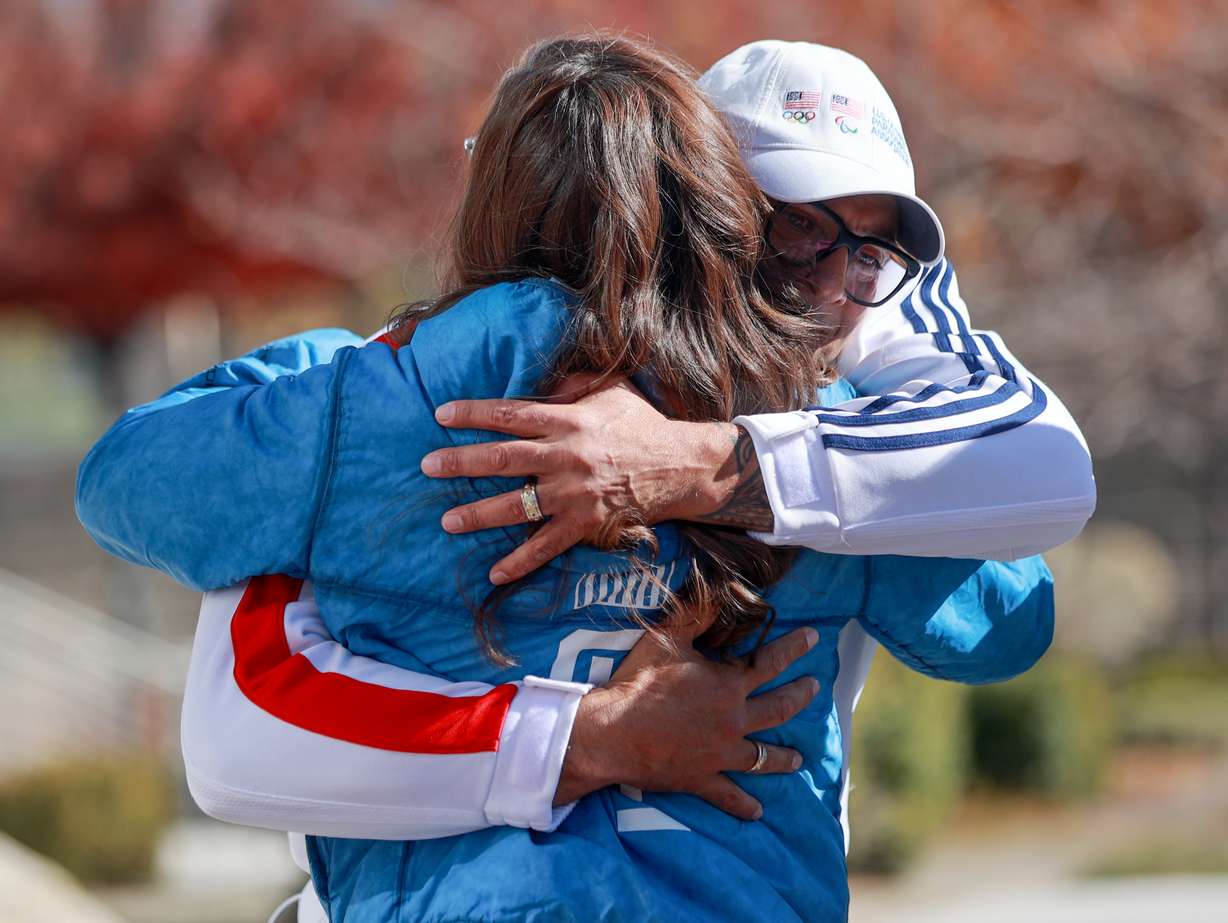
Those who attend the viewing event may also help shape the feel of the 2034 Olympics. Salt Lake City plans to launch a process next week to gather information on the types of positive impacts residents want from hosting the Games. More opportunities are anticipated during the 2026 watch event, Mendenhall said.
Olympic organizers announced last month that they had already secured more than $200 million in fundraising commitments, accounting for over two-thirds of their $300 million target goal for event planning. The bulk of the money needed to pull off the event is expected to arrive after the 2028 Summer Olympics in Los Angeles, when Salt Lake City will be able to tap into sponsorship money.
Salt Lake City first hosted the Winter Olympics in 2002, which generated about $7.5 billion economic output in 2023 dollars, according to an analysis by the University of Utah Kem C. Gardner Policy Institute released last year.
The institute estimated that hosting the event again will spur $6.6 billion in output over the next decade, generating a slightly smaller impact because fewer infrastructure projects will be needed to pull it off, since many of the 2002 venues have been maintained since the event.