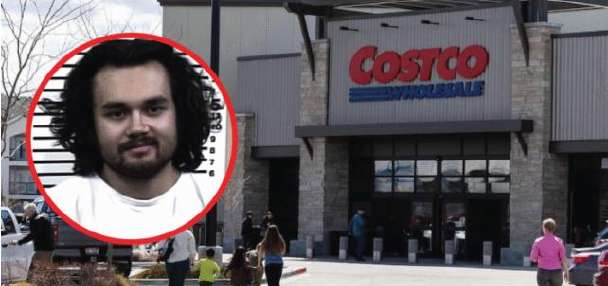
- Jeremy Best received three life sentences for murdering his wife, unborn baby and son.
- Defense highlighted Best's bipolar disorder, suggesting it influenced his violent actions.
- Family expressed gratitude for justice, urging community reflection on life and legacies.
DRIGGS,Idaho — The second and final day of Jeremy Best's sentencing ended Thursday, in which the prosecution called multiple witnesses to show that Best was allegedly "capable of extreme homicidal violence."
District Judge Dane Watkins Jr. sentenced Jeremy Best, 50, to three life sentences without parole.
Best pleaded guilty as part of a plea agreement to first-degree murder in the death of 10-month-old Zeke Best and second-degree murder in the deaths of Kali Randall and their unborn daughter, Freya.
Best appeared in court for day two, represented by his defense attorney Jim Archibald.
The Randall family spoke with EastIdahoNews.com after the hearing, expressing their gratitude to the court, and encouraging the community to remember Kali, Zeke and Freya.
"We are very thankful for the judgment today in the sentencing. We are also very, very grateful that the court and the public were able to see the humanized side, and see who Kali, Zeke and Freya were," said Brian Randall, Kali Randall's brother. "This tragedy has allowed us to tell others in the community to reevaluate, think deeper, be more grounded, and reconnect to things that maybe they've lost. That part of their lives, their legacies, will live on forever."
Here's what happened on the final day of sentencing.
Defense witnesses
The first witness called by the defense was Mary Goody, the mediation specialist for the case.
Goody presented a PowerPoint presentation of Best's life, leading up to the murders.
The presentation included a video statement from a family friend of Best, Michael Atella, who said Best experienced manic episodes growing up.
"To think that Jeremy (killed Zeke) was heartbreaking, but I knew it wasn't Jeremy," said Atella. "It was his bipolar disorder and some other drugs that he had taken."
Goody continued with her timeline, saying that Best was diagnosed with bipolar disorder, Type 1 manic, in the early 2000s while attending drug and alcohol treatment.
Best and many in the gallery began to cry during this portion, while Goody described his relationship with Randall and showed photos of love letters that she left him over the years. One stated multiple reasons she loved him, such as his humor, music taste and that he was an "(expletive) snowboarder."
"Happy first anniversary. What a year it has been, through it all we grow a little each day. I look around on the daily in compete awe of this life," said Randall. "Never did I imagine I would be here now, a wife, a mother. I have never been more proud of two things in my life. Your dedication to us shows me your true and deep loving heart."
Goody then showed security footage of Best being arrested after being found naked at the Swan Valley General Store.
In the video, Best told officers he did not know his name, where he lived, what day it was, or how he got to the store.
Best told officers the last thing he remembered was having Thanksgiving dinner, and admitted that he had been doing drugs recently. An ambulance then took him to Eastern Idaho Regional Medical Center.
Melanie Rehberg, a friend of Best and Randall, sent a video statement for the presentation, explaining that they were good friends of the couple and spoke to them around the time of the killings.
"I do believe that had EIRMC not released him, this tragedy wouldn't have happened," said Rehberg. "EIRMC did not do their job. … Mental health is much more serious than deadly disease, and it can kill many more people than just the one who is sick."
Best's mental health
Dr. John Landers, an Idaho clinical psychologist, was called to the stand, saying he met with Best twice to evaluate him, and found that he had bipolar disorder, mania and a substance abuse disorder.
"He would require forever treatment, never-ending treatment for his bipolar 1 disorder," said Landers. "It doesn't just go away. … If you don't treat it, it's going to get worse over time."
Landers then said Best has been offered medication for his diagnoses in the Bonneville County Jail, but he does not always take it.
"He didn't like the side effects. He also felt like he was functioning reasonably well without it," said Landers. "He said he would restart it in the fall, which is when he tends to cycle."
Landers also said that Best has been dangerous during his time spent in jail, specifically when he wasn't taking his anti-psychotic medications.
"It was the initial phase of his incarceration that was a concern," said Landers.